Link Copied!
Barnett Newman Quotes (1905-1970)
Actor, Artist, Painter


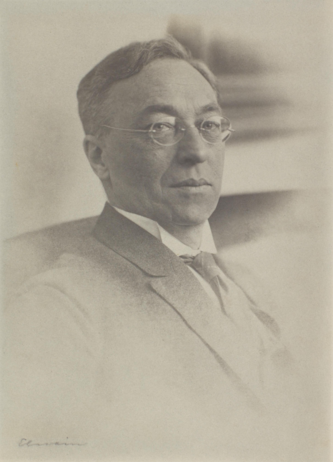

About Barnett Newman
Barnett Newman (29 January 1905 – 4 July 1970) was an American artist. He is seen as one of the major figures in abstract expressionism and one of the foremost of the Color Field painters.
Best Barnett Newman Quotes
Shortest
Earliest
Explore our curated collection of the most famous and impactful Barnett Newman quotes.

“Surrealism, is interested in a dream world that will penetrate the human psyche.”
“All artists whether primitive or sophisticated, have been involved in the handling of chaos.”
“Painting, like passion, is a living voice, which, when I hear it, I must let it speak, unfettered.”

“The problem of a painting is physical and metaphysical the same as I think life is physical and metaphysical.”

“The failure of abstract painting is due to the confusion that exists in the understanding of primitive art [as well as that] concerning the nature of abstraction.”

“The present painter is concerned not with his own feelings or with the mystery of his own personality but with the penetration into the world-mystery. His imagination is therefore attempting to dig into metaphysical secrets.”
“[Concerning all painters] working in what is known as the abstract style: [the abstract form] is a living thing.. ..a carrier of the awesome feelings he felt before the unknowable [common quote of Barnett Newman, Clifford Still, and Mark Rothko, 1947]”
“We are freeing ourselves of the impediments of memory, association, nostalgia, legend, myth, or what have you, that have been the devices of western European painting. Instead of making 'cathedrals' out of Christ, man, or 'life', we are making it out of ourselves, out of our own feelings..”
“The present painter is concerned not with his own feelings or with the mystery of his own personality but with the penetration into the world mystery. His imagination is therefore attempting to dig into metaphysical secrets. To that extend his art is concerned with the sublime. It is a religious art which through symbols will catch the basic truth of life which is its sense of tragedy.”
“Does a man want to be an artist? Is it like he wants to be a priest, or a lawyer? Is the artist that kind of profession? Or, as I once actually wrote, I think every man is an artist. An artist is a matter of my birthright... what I'd like to be is a man in the world. And I paint in order to do a painting, not to... make myself into a so-called artist... I'm impelled to do something, to say something.”

“The present painter can be said to work with chaos not only in the sense that he is handling the chaos of the blank picture plane, but also in that he is handling the chaos of form. In trying to go beyond the visible and the known world he is working with forms that are unknown even to him. He is therefore engaged in a true act of discovery in the creation of new forms and symbols that will have the living quality of creation.”

“..the present painter is not concerned with the process. Herein lies the difference between them and the Surrealists. At the same time in his desire, in his will to set down the ordered truth.. ..it can be said that the artist like a true creator is delving into chaos. It is precisely this that makes him an artist for the Creator in creating the world began with the same material, for the artist tries to wrest truth from the void..”
“In 1940, some of us woke up to find ourselves without hope – to find that painting did not really exist. Or to coin a modern phrase, painting.. ..was dead. The awakening had a exaltation of a revolution. It was that awakening that inspired the aspiration – the high purpose – quite a different thing from ambition – to start from scratch, to paint as if painting never existed before. It was that naked revolutionary moment that made painters out of painters.”
“Sylvester: When was it that you first did a painting with one or two simple lines, horizontal or vertical, across the surface?
Newman: I would say that it began in '46— '47. In those years, whenever I did a painting with one or two elements in it, it did always have a sense of an atmospheric background, I suppose — with the exception of a painting which I called Euclidian Abyss, where the background is black and has some of the white coming through, but there's no true atmosphere.”
Newman: I would say that it began in '46— '47. In those years, whenever I did a painting with one or two elements in it, it did always have a sense of an atmospheric background, I suppose — with the exception of a painting which I called Euclidian Abyss, where the background is black and has some of the white coming through, but there's no true atmosphere.”
“The subject matter of creation is chaos. The present feeling seems to be that the artist is concerned with form, color, and spatial arrangement. This objective approach to art reduces it to a kind of ornament. The whole attitude of abstract painting, for example, has been such that it has reduced painting to an ornamental art whereby the picture surface is broken up in geometrical fashion into a new kind of design-image. It is a decorative art built on a slogan of purism where the attempt is made for an unworldly statement...”
“..[by making his work 'Onement', in 1948]..from then on I had to give up any relation to nature, as seen [by himself till then]. That doesn't mean that I think my things are mathematical or removed from life. By 'nature' I mean something very specific. I think that some abstractions - for example Kandinsky's - are really nature paintings. The triangles and the spheres or circles could be bottles. They could be trees, or buildings. I think that in 'Euclydean Abyss' and 'Onement' I removed myself from nature. But I did not remove myself from life.”

“The new painter owes the abstract artist a debt for giving him his language, but the new painting is concerned with a new type of abstract thought.. .He [the new painter] is declaring that the art of Western Europe is voluptuous art first, an intellectual art by accident. He is reversing the situation by declaring that art is an expression of the mind first and whatever sensuous elements are involved are incidental to that expression. The new painter is therefore the true revolutionary, the real leader who is placing the artist's function on its rightful plane of the philosopher and the pure scientist who is exploring the world of ideas, not the world of the senses.. ..so the artist is today giving us a vision of the world of truth in terms of visual symbols.”
“It was not the inexperienced art public that became American Scenists. It was the artists themselves, a highly sophisticated group, thoroughly familiar with the art work and the art traditions of the world, who had flocked to Paris to participate in the great cultural center, who were very conscious of the Impressionists and Post-Impressionists revolutions, who fell for this propaganda [to strive for a pure national American art]. It is upon them that responsibility falls. Their support of this reactionary philistinism is an inexcusable betrayal.. .It is time for the artists to wake up and re-examine their aesthetic foundations; to rid themselves of the millstone that has made art in America an expensive picture postcard-factory.. .It is time that artists refused isolationist money, repudiated the art dealers, the favor of the museum directors. It is time artists forgot about success..”
“We feel that our pictures demonstrate our aesthetic beliefs, some of which we, therefore, list:
1. To us art is an adventure into an unknown world, which can be explored only by those willing to take the risks.
2. This world of imagination is fancy-free and violently opposed to common sense.
3. It is our function as artists to make the spectator see the world our way not his way.
4. We favor the simple expression of the complex thought. We are for the large shape because it has the impact of the nequivocal. We wish to reassert the picture plane. We are for flat forms because they destroy illusion and reveal truth.
5. It is a widely accepted notion among painters that it does not matter what one paints as long as it is well painted. This is the essence of academicism. There is no such thing as good painting about nothing. We assert that the subject is crucial and only that subject matter is valid which is tragic and timeless. That is why we profess spiritual kinship with primitive and archaic art.
Consequently if our work embodies these beliefs, it must insult anyone who is spiritually attuned to interior decoration; pictures for the home...”

Barnett Newman Quotes by Topic
Find exactly what you are looking for by browsing this categorized list of Barnett Newman quotes by topic.
Barnett Newman on Illusion
“We favor the simple expression of the complex thought. We are for the large shape because it has the impact of the unequivocal. We wish to reassert the picture plane. We are for flat forms because they destroy illusion and reveal truth.”

Barnett Newman on Abstract art
“..[after making 'Onement', in 1948].. from then on I had to give up any relation to nature, as seen [by himself till then]. That doesn't mean that I think my things are mathematical or removed from life. By 'nature' I mean something very specific. I think that some abstractions - for example Kandinsky's - are really nature paintings. The triangles and the spheres or circles could be bottles. They could be trees, or buildings. I think that in 'Euclydean Abyss' and 'Onement' I removed myself from nature. But I did not remove myself from life.”

What Barnett Newman Said About Others
Discover personal opinions Barnett Newman shared regarding contemporaries.
Barnett Newman on Wassily Kandinsky
“..[quote of Newman, on making his work 'Onement', in 1948]..from then on I had to give up any relation to nature.. .That doesn't mean that I think my things are mathematical or removed from life. By 'nature' I mean something very specific. I think that some abstractions - for example Kandinsky's - are really nature paintings. The triangles and the spheres or circles could be bottles. They could be trees, or buildings. I think that in 'Euclydean Abyss' and 'Onement' I removed myself from nature. But I did not remove myself from life.”

Quotes About Barnett Newman
Gain deeper perspective through quotes about Barnett Newman from others.
Quote of Franz Kline on Barnett Newman
“You can tell in Léger just when he discovered how to make it like an engine.. ..What's wrong with that? You see it in Barney (=Barnett Newman) too, that he knows what a painting should be. He [Newman] paints as he thinks painting should be, which his pretty heroic”
Jean-François Lyotard on Barnett Newman
“Subject matter is not.. ..eliminated from Newman's painting in any strict sense. In a monologue entitled The plastic Image (1943-45), Newman stresses the importance of subject-matter in painting. In the absence of subject-matter, he writes, painting becomes 'ornamental'.”

About Barnett Newman
Barnett Newman (29 January 1905 – 4 July 1970) was an American artist. He is seen as one of the major figures in abstract expressionism and one of the foremost of the Color Field painters.