Speaking with the Journal American's Frank Graham, circa October 1946, re the shift employed against Ted Williams in the 1946 World Series; as quoted in The Big Fella (2018) by Jane Leavy, p. 301.
“
They did that to me in the American League one year. I coulda hit .600 that year slicing singles to left. [Interviewer asks why he didn't do so.] That's not what the fans came out to see.
— Babe Ruth
What It Means
This is a placeholder explanation generated by the low-overhead model. It interprets "They did that to me in the American League one year. I coulda hit .600 that year slicing singles to left. [Interviewer asks why he didn't do so.] That's not what the fans came out to see." in the context of "Speaking with the Journal American's Frank Graham, circa October 1946, re the shift employed against Ted Williams in the 1946 World Series; as quoted in The Big Fella (2018) by Jane Leavy, p. 301." to mean that wisdom is timeless.
Source: Wikiquote: "Babe Ruth" (Quotes)
The 'What it means' explanation text was generated by Google Gemini Flash (accessed January 18, 2026). https://gemini.google.com/app
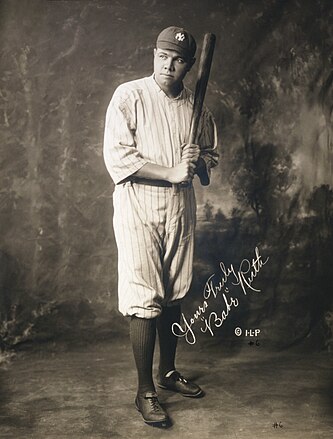
About Babe Ruth
George Herman Ruth (6 February 1895 – 16 August 1948) was an American Major League Baseball player from 1914 to 1935, named as the greatest baseball player in history in various surveys and rankings. His career record of 714 home runs stood for 39 years until surpassed by Hank Aaron with 755 home runs in 1974.
About Babe Ruth
George Herman Ruth (6 February 1895 – 16 August 1948) was an American Major League Baseball player from 1914 to 1935, named as the greatest baseball player in history in various surveys and rankings. His career record of 714 home runs stood for 39 years until surpassed by Hank Aaron with 755 home runs in 1974.
View all quotes →