Link Copied!
Auguste Comte Quotes (1798-1857)
Philosopher

About Auguste Comte
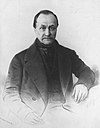
Isidore Marie Auguste François Xavier Comte (19 January 1798 – 5 September 1857) was a French philosopher who coined the terms "sociology" and "altruism" and developed forms of social discipline he called Positivism.
Best Auguste Comte Quotes
Shortest
Earliest
Explore our curated collection of the most famous and impactful Auguste Comte quotes.
“Foreknowledge is power.”


“To understand a science it is necessary to know its history.”

“Mathematical Analysis is... the true rational basis of the whole system of our positive knowledge.”

“Men are not allowed to think freely about chemistry and biology: why should they be allowed to think freely about political philosophy?”

“There are three successive states of morality answering to the three principal stages of human life; the personal, the domestic, and the social stage.”
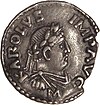
“It was under Catholic Feudalism that they were first united; a union for which their incorporation into the Roman empire had prepared them, and which was finally organized by the incomparable genius of Charlemagne.”
“Reorganisation, irrespectively of God or king, by the worship of Humanity, systematically adopted. Man’s only right is to do his duty. The Intellect should always be the servant of the Heart, and should never be its slave.”
“The object of all true Philosophy is to frame a system which shall comprehend human life under every aspect, social as well as individual. It embraces, therefore, the three kinds of phenomena of which our life consists, Thoughts, Feelings, and Actions.”

“Thus the social position of women is in this respect very similar to that of philosophers and of the working classes. And we now see why these three elements should be united. It is their combined action which constitutes the moral or modifying force of society.”
“Language forms a kind of wealth, which all can make use of at once without causing any diminution of the store, and which thus admits a complete community of enjoyment; for all, freely participating in the general treasure, unconsciously aid in its preservation.”
“After Montesquieu, the next great addition to Sociology (which is the term I may be allowed to invent to designate Social Physics) was made by Condorcet, proceeding on the views suggested by his illustrious friend Turgot.”

“The principal means of realizing it will be the formation of an alliance between philosophers and the working classes, for which both are alike prepared by the negative and positive progress of the last five centuries. The direct object of their combined action will be to set in motion the force of Public Opinion.”
“Every attempt to refer chemical questions to mathematical doctrines must be considered, now and always, profoundly irrational, as being contrary to the nature of the phenomena. . . . but if the employment of mathematical analysis should ever become so preponderant in chemistry (an aberration which is happily almost impossible) it would occasion vast and rapid retrogradation....”
“And now I have explained the series of social and intellectual conditions by which the discovery of sociological laws, and consequently the foundation of Positivism, was fixed for the precise date at which I began my philosophical career: that is to say, one generation after the progressive dictatorship of the Convention, and almost immediately after the fall of the retrograde tyranny of Bonaparte.”

“It lays down, as is generally known, that our speculations upon all subjects whatsoever, pass necessarily through three successive stages: a Theological stage, in which free play is given to spontaneous fictions admitting of no proof; the Metaphysical stage, characterized by the prevalence of personified abstractions or entities; lastly, the Positive stage, based upon an exact view of the real facts of the case.”
“The first condition of unity is a subjective principle; and this principle in the Positive system is the subordination of the intellect to the heart: Without this the unity that we seek can never be placed on a permanent basis, whether individually or collectively. It is essential to have some influence sufficiently powerful to produce convergence amid the heterogeneous and often antagonistic tendencies of so complex an organism as ours.”

“The mathematical thermology created by Fourier may tempt us to hope that, as he has estimated the temperature of the space in which we move, me may in time ascertain the mean temperature of the heavenly bodies: but I regard this order of facts as for ever excluded from our recognition. We can never learn their internal constitution, nor, in regard to some of them, how heat is absorbed by their atmosphere. We may therefore define Astronomy as the science by which we discover the laws of the geometrical and mechanical phenomena presented by the heavenly bodies.”

“In the final, positive state, the mind has given over the vain search after Abolute notions, the origin and destination of the universe, and the cause of phenomenon, and applies itself to the tudy of their laws, - that is, their invariable relations of succession and resemblance. Reasoning and observation, duly combined, are the means of this knowledge. What is now understood when we speak of an explanation of the facts is simply the establishment of a connection between single phenomena and some general facts, the number of which continually diminishes with the progress of science.”
“Social positivism only accepts duties, for all and towards all. Its constant social viewpoint cannot include any notion of rights, for such notion always rests on individuality. We are born under a load of obligations of every kind, to our predecessors, to our successors, to our contemporaries. These obligations then increase or accumulate, for it is some time before we can return any service. … Any human right is therefore as absurd as immoral. Since there are no divine rights anymore, this concept must therefore disappear completely as related only to the preliminary regime and totally inconsistent with the final state where there are only duties based on functions.”
“A common monetary standard will be established, with the consent of the various governments, by which industrial transactions will be greatly facilitated. Three spheres made respectively of gold, silver, and platinum, and each weighing fifty grammes, would differ sufficiently in value for the purpose. The sphere should have a small flattened base, and on the great circle parallel to it the Positivist motto would be inscribed. At the pole would be the image of the immortal Charlemagne, the founder of the Western Republic, and round the image his name would be engraved, in its Latin form, Carolus; that name, respected as it is by all nations of Europe alike, would be the common appellation of the universal monetary standard.”
“The errors of Communism must be rectified; but there is no necessity for giving up the name, which is a simple assertion of the paramount importance of Social Feeling. However, now that we have happily passed from monarchy to republicanism, the name of Communist is no longer indispensable; the word Republican expresses the meaning as well, and without the same danger. Positivism, then, has nothing to fear from Communism; on the contrary, it will probably be accepted by most Communists among the working classes, especially in France where abstractions have but little influence on minds thoroughly emancipated from theology. The people will gradually find that the solution of the great social problem which Positivism offers is better than the Communistic solution.”
“All classes, therefore, must be brought under women’s influence; for all require to be reminded constantly of the great truth that Reason and Activity are subordinate to Feeling. Of their influence upon philosophers I have spoken. If they are men worthy of their mission, they will be conscious of the tendency which their life has to harden them and lead them into useless speculation; and they will feel the need of renewing the ardour of their social sympathy at its native source. Feeling, when it is pure and deep, corrects its own errors, because they clash with the good to which it is ever tending. But erroneous use of the intellectual or practical faculties, cannot be even recognized, much less corrected, without the aid of Affection, which is the only part of our nature that suffers directly from such errors. Therefore whenever either the philosopher or the people deviate from duty, it will be the part of women to remonstrate with them gently, and recall them to the true social principles which are entrusted to their special charge.”
“Notwithstanding the eminent difficulties of the mathematical theory of sonorous vibrations, we owe to it such progress as has yet been made in acoustics. The formation of the differential equations proper to the phenomena is, independent of their integration, a very important acquisition, on account of the approximations which mathematical analysis allows between questions, otherwise heterogeneous, which lead to similar equations. This fundamental property, whose value we have so often to recognize, applies remarkably in the present case; and especially since the creation of mathematical thermology, whose principal equations are strongly analogous to those of vibratory motion. This means of investigation is all the more valuable on account of the difficulties in the way of direct inquiry into the phenomena of sound. We may decide the necessity of the atmospheric medium for the transmission of sonorous vibrations; and we may conceive of the possibility of determining by experiment the duration of the propagation, in the air, and then through other media; but the general laws of the vibrations of sonorous bodies escape immediate observation. We should know almost nothing of the whole case if the mathematical theory did not come in to connect the different phenomena of sound, enabling us to substitute for direct observation an equivalent examination of more favorable cases subjected to the same law. For instance, when the analysis of the problem of vibrating chords has shown us that, other things being equal, the number of oscillations is hi inverse proportion to the length of the chord, we see that the most rapid vibrations of a very short chord may be counted, since the law enables us to direct our attention to very slow vibrations. The same substitution is at our command in many cases in which it is less direct.”
Auguste Comte Quotes by Topic
Find exactly what you are looking for by browsing this categorized list of Auguste Comte quotes by topic.
Auguste Comte on Mathematical analysis 2 quotes
“Mathematical Analysis is... the true rational basis of the whole system of our positive knowledge.”

Auguste Comte on Mathematics
“[F]inding direct measurement so often impossible, we are compelled to devise means of doing it indirectly. Hence arose Mathematics.”
Auguste Comte on Chemistry
“Men are not allowed to think freely about chemistry and biology: why should they be allowed to think freely about political philosophy?”

Auguste Comte on Integration
“The formation of the differential equations proper to the phenomena is, independent of their integration, a very important acquisition, on account of the approximations which mathematical analysis allows between questions, otherwise heterogeneous.”
Auguste Comte on Incorrect predictions
“Every attempt to refer chemical questions to mathematical doctrines must be considered, now and always, profoundly irrational, as being contrary to the nature of the phenomena. . . . but if the employment of mathematical analysis should ever become so preponderant in chemistry (an aberration which is happily almost impossible) it would occasion vast and rapid retrogradation....”
Auguste Comte on History of science
“Every science may be exhibited under two methods or procedures, the Historical and the Dogmatic. ...The more discoveries are made, the greater becomes the labour of the historical method of study, and the more effectual the dogmatic, because the new conceptions bring forward the earlier ones in a fresh light. ...By the dogmatic method, therefore, must every advanced science be attained, with so much of the historical combined with it as is rendered necessary ...”

Auguste Comte on Mind
“The progress of the individual mind is not only an illustration, but an indirect evidence of that of the general mind. The point of departure of the individual and of the race being the same, the phases of the mind of a man correspond to the epochs of the mind of the race. Now, each of us is aware, if he looks back upon his own history, that he was a theologian in his childhood, a metaphysician in his youth, and a natural philosopher in his manhood. All men who are up to their age can verify this for themselves.”

Auguste Comte on Science education
“A new science must be pursued historically, the only thing to be done being to study in chronological order the different works which have contributed to the progress... But when such materials have become recast to form a general system, to meet the demand for a more natural logical order, it is because the science is too far advanced for the historical order to be practicable or suitable. ...By the dogmatic method ...must every advanced science be attained, with so much of the historical combined with it as is rendered necessary...”

Auguste Comte on Philosophy of science
“Chemistry... Without this new order of phenomena the most important operations of terrestrial nature would be incomprehensible to us; and there is no other class of phenomena so intimate and so complex. Inert bodies can never appear so nearly like vital ones as when they produce in each other those rapid and profound perturbations which characterize chemical effects. ...the spirit of all theological and metaphysical philosophy consists in conceiving of all phenomena as analogous to the only one which is known by immediate consciousness—Life: and we can easily understand that the primitive method of philosophizing must have exerted a more powerful and obstinate dominion over chemical phenomena than any other, in the inorganic world.—We must consider, too, that direct and spontaneous observation must have been applied in the first place only to very complicated phenomena, such as vegetable combustions, fermentations, etc., the analysis of which now requires all the resources of our science: and that the most important chemical phenomena are produced only in artificial circumstances, which were long in being devised, and very difficult at first to institute. ...we can hardly imagine the difficulty there must have been, in the infancy of chemistry, in creating suitable subjects for observation: and we can not suppose that the ancient investigators of nature could have had energy and perseverance to discover the principal phenomena of the science if they had not been constantly stimulated by the unbounded hopes arising from their chimerical notions of the constitution of matter.”
Auguste Comte on Theory
“All competent thinkers agree with Bacon that there can be no real knowledge except that which rests upon observed facts. This fundamental maxim is evidently indisputable if it is applied, as it ought to be, to the mature state of our intelligence. But, if we consider the origin of our knowledge, it is no less certain that the primitive human mind could not, and indeed ought not to, have thought in that way. For if, on the one hand, every Positive theory must necessarily be founded upon observations, it is, on the other hand, no less true that, in order to observe, our mind has need of some theory or other. If in contemplating phenomena we did not immediately connect them with principles, not only would it be impossible for us to combine these isolated observations, and therefore to derive profit from them, but we should even be entirely incapable of remembering facts, which would for the most remain unnoted by us. Thus there were two difficulties be overcome: the human mind had to observe in order to form real theories, and yet had to form theories of some sort before it could apply itself to a connected series of observations. The primitive human mind, therefore, found itself involved in a vicious circle, from which it would never have had any means of escaping, if a natural way of the difficulty had not fortunately found by the spontaneous development of Theological conceptions. ...chimerical hopes ..exaggerated ideas of man's importance in the universe to which the Theological Philosophy ...at the commencement, ...afforded an indispensable stimulus without the aid which we cannot, indeed, conceive how the primitive human mind would have been induced to undertake any arduous labours.”

Auguste Comte on Unification in science and mathematics
“The scientific spirit must then lose its present tendency to speciality, and be impelled towards a logical generality; for all the branches of natural philosophy must furnish their contingent to the common doctrine; in order to which they must first be completely condensed and co-ordinated. When the savans have learned that active life requires the habitual and simultaneous use of the various positive ideas that each of them isolates from all the rest, they will perceive that their social ascendency supposes the prior generalization of their common conceptions, and consequently the entire philosophical reformation of their present practice. Even in the most advanced sciences... the scientific character at present fluctuates between the abstract expansion and the partial application, so as to be usually neither thoroughly speculative nor completely active; a consequence of the same defect of generality which rests the ultimate utility of the positive spirit on minor services, which are as special as the corresponding theoretical habits. But this view, which ought to have been long outgrown, is a mere hindrance in the way of the true conception,—that positive philosophy contemplates no other immediate application than the intellectual and moral direction of civilized society; a necessary application, presenting nothing that is incidental or desultory, and imparting the utmost generality, elevation, unity, and consistency, to the speculative character. Under such a homogeneousness of view and identity of aim, the various positive philosophers will naturally and gradually constitute a European body, in which the dissensions that now break up the scientific world into coteries will merge; and with the rivalries of struggling interests will cease the quarrels and coalitions which are the opprobrium of science in our day.”
What Auguste Comte Said About Others
Discover personal opinions Auguste Comte shared regarding contemporaries.
Auguste Comte on Joseph de Maistre
“De Maistre has for me the peculiar property of helping me to estimate the philosophie capacity of people, by the repute in which they hold him.”

Auguste Comte on John Stuart Mill
“May it not be the fact that mankind, who after all are made up of single human beings, obtain a greater sum of happiness when each pursues his own, under the rules and conditions required by the good of the rest, than when each makes the good of the rest his only object, and allows himself no personal pleasures not indispensable to the preservation of his faculties? The regimen of a blockaded town should be cheerfully submitted to when high purposes require it, but is it the ideal perfection of human existence?”
Quotes About Auguste Comte
Gain deeper perspective through quotes about Auguste Comte from others.
T. H. Huxley on Auguste Comte
“Catholicism minus Christianity.”
Tomáš Garrigue Masaryk on Auguste Comte
“Comte began, like Hume, with the rejection of religion, but subsequently relapsed into fetichism.”

Louis Pasteur on Auguste Comte

J. R. Partington on Auguste Comte
“The philosopher Comte has made the statement that chemistry is a non-mathematical science. He also told us that astronomy had reached a stage when further progress was impossible. These remarks, coming after Dalton's atomic theory, and just before Guldberg and Waage were to lay the foundations of chemical dynamics, Kirchhoff to discover the reversal of lines in the solar spectrum, serve but to emphasize the folly of having "recourse to farfetched and abstracted Ratiocination," and should teach us to be "very far from the litigious humour of loving to wrangle about words or terms or notions as empty".”
Leo Tolstoy on Auguste Comte
“The only true and scientific method according to Comte is therefore the inductive method and science is only such as is based on experiment. Secondly, the aim and apex of science is the new science of the imaginary organism of humanity or of the super-organic being-humanity: this new imaginary science being sociology. From this view of science in general it appeared that all former knowledge was false, and the whole history of humanity's knowledge of itself fell into three, or really two, periods: # The theological and metaphysical periods, lasting from the commencement of the world until Comte # and the present period of true science — positivism — which began with Comte. This was all very nice; there was only one error, namely, that the whole edifice was built on the sand — on the arbitrary assertion that humanity is an organism. That assertion was arbitrary because we have no more right to acknowledge the existence of an organism of humanity not subject to observation than we have to acknowledge the existence of a triune God and similar theological propositions. That assertion was fallacious because to the conception of humanity, that is, of men, the definition of an organism was incorrectly affixed despite the fact that humanity lacks the essential sign of an organism, namely a centre of sensation and consciousness. We only call an elephant or a bacterium an 'organism' because, by analogy we attribute to those beings a similar unification of sensation and of consciousness to that we are conscious of in ourselves; but in human societies and in humanity this essential indication is lacking, and therefore, however many other indications we may detect that are common to humanity and to an organism, in the absence of that essential indication, the acknowledgement of humanity as an organism is incorrect. But despite the arbitrariness and incorrectness of its fundamental basis the positive philosophy was accepted most cordially by the so-called educated world, so important for that world was the justification this philosophy afforded to the existing order of things by regarding the present rule of violence among men as Just. What is remarkable in this connexion is that of Comte's works which consist of two parts — the positive philosophy and the positive politics — the learned world only accepted the first: the part which, on the new experimental basis, offered a justification for the existing evil of human societies; but the second part, dealing with the moral obligations of altruism resulting from acknowledging humanity as an organism, was considered not merely unimportant but even insignificant and unscientific.”

Morton White on Auguste Comte
“Kierkegaard was interested in the development of the existent, individual, concrete human personality. Its chief Kierkegaardian stages are the esthetic, the moral, and the religious, and they form a striking contrast to Comte’s trio: the theological, the metaphysical, and the scientific. For one thing Kierkegaard’s highest stage of human existence is the religious, while Comte’s is the scientific; for another, the Kierkegaardian personality’s journey through its stages is absolutely free.”
About Auguste Comte
Isidore Marie Auguste François Xavier Comte (19 January 1798 – 5 September 1857) was a French philosopher who coined the terms "sociology" and "altruism" and developed forms of social discipline he called Positivism.