Link Copied!
Andy Warhol Quotes (1928-1987)
Actor, Painter, King
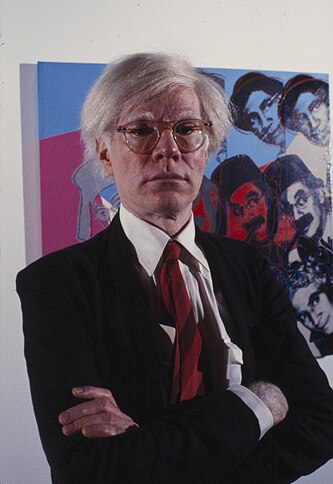




About Andy Warhol
Andy Warhol (born Andrew Warhola; 6 August 1928 – 22 February 1987) was an American painter, filmmaker, publisher, actor and major figure in the Pop Art movement.
Best Andy Warhol Quotes
Shortest
Earliest
Explore our curated collection of the most famous and impactful Andy Warhol quotes.
“In the future everyone will be world-famous for 15 minutes.”
“Pelé is one of the few who contradicted my theory [...] Instead of 15 minutes of fame, he will have 15 centuries.”
“(You'd be surprised who'll hang an electric chair in the living room. Especially if the background matches the drapes.)”
“The reason I'm painting this way is that I want to be a machine, and I feel that whatever I do and do machine-like is what I want to do.”

“(You wouldn't believe how many people will hang up a picture of an electric chair? especially if it matches the color of their curtains.)”
“You'd be surprised how many people want to hang an electric chair on their living-room wall. Specially if the background color matches the drapes.”
“(You wouldn't believe the number of people who hang the electric chair painting in the homes, especially if the colour of the canvas matches the curtains.)”
“(You wouldn't believe how many people will hang a picture of an electric chair in their room – especially if the color of the picture matches the curtains.)”
“Andy Warhol: I think everybody should like everybody.
Gene Swenson: Is that what Pop Art is all about?
Andy Warhol: Yes, it's liking things.”
Gene Swenson: Is that what Pop Art is all about?
Andy Warhol: Yes, it's liking things.”
“Edward Lucie-Smith: Would you like to see your pictures on as many walls as possible, then?
Andy Warhol: Uh, no, I like them in closets.”
Andy Warhol: Uh, no, I like them in closets.”
“The President has so much good publicity potential that hasn't been exploited. He should just sit down one day and make a list of all the things that people are embarrassed to do that they shouldn't be embarrassed to do, and then do them all on television.”

“I can never get over when you're on the beach how beautiful the sand looks and the water washes it away and straightens it up and the trees and the grass all look great. I think having land and not ruining it is the most beautiful art that anybody could ever want to own.”
“If you want to know all about Andy Warhol, just look at the surface; of my paintings and films and me, and there I am. There's nothing behind it.. .I see everything that way, the surface of things, a kind of mental Braille. I just pass my hands over the surface of things. [1973]”
“I suppose I have a really loose interpretation of "work" because I think that just being alive is so much work at something you don't always want to do. Being born is like being kidnapped. And then sold into slavery. People are working every minute. The machinery is always going. Even when you sleep.”

“When I look at things, I always see the space they occupy. I always want the space to reappear, to make a comeback, because it's lost space when there's something in it. If I see a chair in a beautiful space, no matter how beautiful the chair is, it can never be as beautiful to me as the plain space.”

“The Pop artists did images that anybody walking down Broadway could recognize in a split second – comics, picnic tables, men's trousers, celebrities, shower curtains, refrigerators, Coke bottles – all the great modern things that the Abstract Expressionists tried so hard not to notice at all. (1960's)”
“I really believe in empty spaces, although, as an artist, I make a lot of junk. Empty space is never-wasted space. Wasted space is any space that has art in it. An artist is somebody who produces things that people don't need to have but that he, for some reason, thinks it would be a good idea to give them.”
“I don't see anything wrong with being alone, it feels great to me. People make a big thing about personal love. It doesn't have to be such a big thing. The same for living - people make a big thing about that too. But personal living and personal loving are the two things the Eastern-type wise men don't think about.”

“If an artist can't do anymore, then he should just quit; and an artist ought to be able to change his style without feeling bad. I heard that Lichtenstein said he might not be painting comic strips a year of two from now [1963]. I think that would be so great, to be able to change styles. And I think that's what's going to happen; that's going to be the whole new scene.”

“During the 60's, I think, people forgot what emotions were supposed to be. And I don't think they've ever remembered. I think that once you see emotions from a certain angle you can never think of them as real again. That's what more or less has happened to me. I don't really know if I was ever capable of love, but after the '60's I never thought in terms of "love" again.”

“Edward Lucie-Smith: What do you think is the characteristic of a really nice person? Some people you obviously do like more than others.
Andy Warhol: Ummm, well, if they talk a lot.
Edward Lucie-Smith: What, and don't make you talk?
Andy Warhol: Yeah, yes, that's a really nice person.
Edward Lucie-Smith: Thank you, Andy.”
Andy Warhol: Ummm, well, if they talk a lot.
Edward Lucie-Smith: What, and don't make you talk?
Andy Warhol: Yeah, yes, that's a really nice person.
Edward Lucie-Smith: Thank you, Andy.”
“Apparently, most people love watching the same basic thing [actions shows on TV], as long as the details are different. But I'm just the opposite: if I'm going to sit and watch the same thing I saw the night before, I don't want it to be essentially the same – I want it to be exactly the same. Because the more you look at the same exact thing, the more the meaning goes away, and the better and emptier you feel. (1960's)”
“Sometimes people let the same problem make them miserable for years when they could just say, "So what." That's one of my favorite things to say. "So what." "My mother didn't love me." So what. "My husband won't ball me." So what. "I'm a success but I'm still alone." So what. I don't know how I made it through all the years before I learned how to do that trick. It took a long time for me to learn it, but once you do, you never forget.”
“I really do live for the future, because when I'm eating a box of candy, I can't wait to taste the last piece. I don't even taste any of the other pieces, I just want to finish and throw the box away and not have to have it on my mind any more. I would rather either have it now or know I'll never have it so I don't have to think about it. That's why some days I wish I were very very old-looking so I wouldn't have to think about getting old-looking.”
“I really don't care that much about "Beauties." What I really like are Talkers. To me, good talkers are beautiful because good talk is what I love. The word itself shows why I like Talkers better than Beauties, why I tape more than I film. It's not "talkies." Talkers are doing something. Beauties are being something. Which isn't necessarily bad, it's just that I don't know what it is they're being. It's more fun to be with people who are doing things.”
“I know a girl who just looks at her face in the medicine cabinet mirror and never looks below her shoulders, and she's four or five hundred pounds but she doesn't see all that, she just sees a beautiful face and therefore she thinks she's a beauty. And therefore, I think she's a beauty, too, because I usually accept people on the basis of their self-images, because their self-images have more to do with the way they think than their objective-images do.”
“I think of myself as an American artist: I like it here.. .I feel I represent the U.S. in my art but I'm not a social critic. I just paint those things in my paintings because those things are the things I know best. I'm not trying to criticize the U.S. in any way, not trying to show up any ugliness at all. I'm just a pure artist, I guess. But I can't say if I take myself seriously as an artist. I just hadn't thought about it. I don't know how they consider me in print, though.”
“When I have to think about it, I know the picture is wrong. And sizing is a form of thinking and coloring is too. My instinct about painting says, 'If you don’t think about it, it's right'. As soon as you have to decide and choose, it's wrong. And the more you decide about, the more wrong it gets. Some people, they paint abstract, so they sit there thinking about it because their thinking makes them feel they're doing something. But my thinking never makes me feel I'm doing anything.”
“A lot of people thought it was me everyone at the 'Factory' was hanging around, that I was some kind of big attraction that everyone came to see, but that's absolutely backward: it was me who was hanging around everyone else. I just paid the rent, and the crowds came simply because the door was open. People weren't particularly interested in seeing me; they were interested in seeing each other. They came to see who came.”
“I'm confused about who the news belongs to. I always have it in my head that if your name's in the news, then the news should be paying you. Because it's your news and they're taking it and selling it as their product. But then they always say that they're helping you, and that's true too, but still, if people didn't give the news their news, and if everybody kept their news to themselves, the news wouldn't have any news. So I guess you should pay each other. But I haven't figured it out fully yet.”

“Somebody said that Bertolt Brecht [German socialist writer of political theater] wanted everybody to think alike. I want everybody to think alike. But Brecht wanted to do it through Communism, in a way. Russia is doing it under government. It's happening here [in America] all by itself without being under a strict government; so if it's working without trying, why can't it work without being Communist? Everybody looks alike and acts alike, and we're getting more and more that way.”
“Before I was shot [June, 1968], I always thought that I was more half-there than all-there - I always suspected that I was watching TV instead of living life. People sometimes say that the way things happen in the movies is unreal, but actually it's the way things happen to you in life that's unreal. The movies make emotions look so strong and real, whereas when things really do happen to you, it's like watching television - you don't feel anything. Right when I was being shot and ever since, I knew that I was watching television. The channels switch, but it's all television.”
“Business art is the step that comes after Art. I started as a commercial artist, and I want to finish as a business artist. After I did the thing called 'art' or whatever it's called, I went into business art. I wanted to be an Art Businessman or a Business Artist. Being good in business is the most fascinating kind of art. During the hippies era people put down the idea of business – they'd say 'Money is bad', and 'Working is bad', but making money is art and working is art and good business is the best art.”
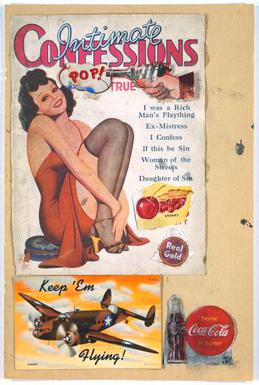
“What's great about this country is that America started the tradition where the richest consumers buy essentially the same things as the poorest. You can be watching TV and see Coca-Cola, and you know that the President drinks Coke, Liz Taylor drinks Coke, and just think, you can drink Coke, too. A Coke is a Coke and no amount of money can get you a better Coke than the one the bum on the corner is drinking. All the Cokes are the same and all the Cokes are good. Liz Taylor knows it, the President knows it, the bum knows it, and you know it.”

“I guess it was the big plane crash picture [why Warhol started his 'Death'-series], the front page of a newspaper: '129 DIED'. I was also painting the Marilyns [the Marylin Monroe portraits, Warhol started after her tragic death in 1962] I realized that everything I was doing must have been Death. It was Christmas or Labor Day - a holiday - and every time that you turned on the radio they said something like '4 millions are going to die'. That started it. But when you see a gruesome picture over and over again, it doesn't really have any effect.”
“Edward Lucie-Smith: Why is it more of a pleasure to do 30 or 40 pictures than to do just one?
Andy Warhol: Then I can, uh, listen to my soundabout which looks just like the thing that I'm wearing now, and you can listen to opera and stuff like that.
Edward Lucie-Smith: Does that mean you don't have to think when you're painting?
Andy Warhol: No, you can listen to really good music.
Edward Lucie-Smith: So, what, painting is an excuse to listen to really good music?
Andy Warhol: Oh, yeah.”
Andy Warhol: Then I can, uh, listen to my soundabout which looks just like the thing that I'm wearing now, and you can listen to opera and stuff like that.
Edward Lucie-Smith: Does that mean you don't have to think when you're painting?
Andy Warhol: No, you can listen to really good music.
Edward Lucie-Smith: So, what, painting is an excuse to listen to really good music?
Andy Warhol: Oh, yeah.”
“At the times in my life when I was feeling the most gregarious and looking for bosom friendships, I couldn't find any takers so that exactly when I was alone was when I felt the most like not being alone. The moment I decided I'd rather be alone and not have anyone telling me their problems, everybody I'd never even seen before in my life started running after me to tell me things I'd just decided I didn't think it was a good idea to hear about. As soon as I became a loner in my own mind, that's when I got what you might call a "following." As soon as you stop wanting something you get it. I've found that to be absolutely axiomatic.”

“After being alive, the next hardest work is having sex. Of course, for some people it isn't work because they need the exercise and they've got the energy for the sex and the sex gives them even more energy. Some people get energy from sex and some people lose energy from sex. I have found that it's too much work. But if you have the time for it, and if you need that exercise—then you should do it. But you could really save yourself a lot of trouble either way by first figuring out whether you're an energy-getter or an energy-loser. As I said, I'm an energy-loser. But I can understand it when I see people running around trying to get some.”

“Sometimes you're invited to a big ball and for months you think about how glamorous and exciting it's going to be. Then you fly to Europe and you go to the ball and when you think back on it a couple of months later what you remember is maybe the car ride to the ball, you can't remember the ball at all. Sometimes the little times you don't think are anything while they're happening turn out to be what marks a whole period of your life. I should have been dreaming for months about the car ride to the ball and getting dressed for the car ride, and buying my ticket to Europe so I could take the car ride. Then, who knows, maybe I could have remembered the ball.”

“We went to see Dr No [first James Bond film, 1962] at Fort-Second Street. It's a fantastic movie, so cool. We walked outside and somebody threw a cherry bomb right in front of us, in this big crowd. And there was blood. I saw blood on people and all over. I felt like I was bleeding all over. I saw in the paper last week that there are more people throwing them - it's just part of the scene - and hurting people. My show in Paris is to be called Death in America. I'll show the Electric-chair pictures and the Dogs in Birmingham and car wrecks and some suicide pictures.”

“I love every "lib" movement there is, because after the "lib" the things that were always a mystique become understandable and boring, and then nobody has to feel left out if they're not part of what is happening. For instance, single people looking for husbands and wives used to feel left out because the image marriage had in the old days was so wonderful. Jane Wyatt and Robert Young. Nick and Nora Charles, Ethel and Fred Mertz, Dagwood and Blondie.”
“What I was actually trying to do in my early movies was show how people can meet other people and what they can do and what they can say to each other. That was the whole idea: two people getting acquainted. And then when you saw it and you saw the sheer simplicity of it, you learned what it was all about. Those movies showed you how some people act and react with other people. They were like actual sociological 'For instance's. They were like documentaries, and if you thought it could apply to you, it was an example, and if it didn't apply to you, at least it was a documentary, it could apply to somebody you knew and it could clear up some questions you had about them.”
“The name [Pop] sounds so awful. Dada must have something to do with Pop. it's so funny, the names are really synonyms. Does anyone know what they're supposed to mean or have to do with, those names? Johns and Rauschenberg, Neo-Dada for all those years, and everyone calling them derivative and unable to transform the things they use, are now called progenitors of Pop. It's funny the way things change. I think John Cage has been very influential, and Merce Cunningham too, I think.. ..History books are being rewritten all the time.”
“It's hard to be creative and it's also hard not to think what you do is creative or hard not to be called creative because everybody is always talking about that and individuality. Everybody's always creative. And it is so funny when you say things aren't, like the shoe I would draw for an advertisement was called a 'creation', but the drawing of it was not.. .There are millions of actors. They're all pretty good. And how many painters are there? Millions of painters and all pretty good. How can you say one style is better then another. You ought to be able to be an Abstract-expressionist next week, or a Pop artist, or a realist, without feeling you're given up something.”
“When you're interested in somebody, and you think they might be interested in you, you should point out all your beauty problems and defects right away, rather than take a chance they won't notice them.. .On the other hand, say you have a purely temporary beauty problem—a new pimple, lackluster hair, no-sleep eyes, five extra pounds around the middle. Still, whatever it is, you should point it out.. .If you don't point out these things they might think that your temporary beauty problem is a permanent beauty problem.. .If they really do like you for yourself, they'll be willing to use their imagination to think of what you must look like without your temporary beauty problem.”
“Sometimes you fantasize that people who are really up-there and rich and living it up have something you don't have, that their things must be better than your things because they have more money than you. But they drink the same Cokes and eat the same hot dogs and wear the same ILGWU clothes and see the same TV shows and the same movies. Rich people can't see a sillier version of Truth or Consequences, or a scarier version of The Exorcist. You can get just as revolted as they can—you can have the same nightmares. All of this is really American.”
“I thought that young people had more problems than old people, and I hoped I could last until I was older so I wouldn't have all those problems. Then I looked around and saw that everybody who looked young had young problems and that everybody who looked old had old problems. The "old" problems to me looked easier to take than the "young" problems. So I decided to go gray so nobody would know now old I was and I would look younger to them than how old they thought I was. I would gain a lot by going gray: (1) I would have old problems, which were easier to take than young problems, (2) everyone would be impressed by how young I looked, and (3) I would be relieved of the responsibility of acting young—I could occasionally lapse into eccentricity or senility and no one would think anything of it because of my gray hair. When you've got gray hair, every move you make seems "young" and "spry," instead of just being normally active. It's like you're getting a new talent. So I dyed my hair gray when I was about twenty-three or twenty-four.”
“I started those [the 'Elisabeth Taylor' pictures, Warhol made from a publicity photo of her 1960 film BUtterfield 8 a long time ago when she was so sick and everybody said she was going to die [but she recovered]. Now I'm doing them all over, putting bright colors on her lips and eyes. My next series will be pornographic pictures, they will look blank; when you turn on the black lights, then you will see them - big breast and ... If a cop came in, then you could just flick out the lights or turn to the regular lights. How could you say that was pornography? ...Segal did a sculpture of two people making love, but he cut it all up, I guess because he thought it was too pornographic to be art ... The thing I like about it is that it makes you forget about style and that sort of things; style isn't really important.”
“The farther West we drove [to California, Fall of 1963, with Gerard Malanga, Wynn Chamberlain, and Taylor Mead for an opening of Warhol's 'Liz & Elvis paintings' at the Ferus Gallery in Los Angeles], the more Pop everything looked on the highways. Suddenly we all felt like insiders because even though Pop was everywhere – that was the thing about it, most people still took it for granted, whereas we were dazzled by it – to us, it was the new Art. Once you 'got' Pop, you could never see a sign the same way again. And once you thought Pop, you could never see America the same way again. The moment you label something, you take a step – I mean, you can never go back again to seeing it unlabeled. We were seeing the future and we knew it for sure.. ..the mystery was gone, but the amazement was just starting. [quote in 1963]”

“Scripts bore me. It's much more exciting not to know what's going to happen. I don't think that plot is important. If you see a movie of two people talking, you can watch it over and over again without being bored. You get involved – you miss things – you come back to it ... But you can't see the same movie over again if it has a plot because you already know the ending ... Everyone is rich. Everyone is interesting. Years ago, people used to sit looking out of their windows at the street. Or on a park bench. They would stay for hours without being bored although nothing much was going on. This is my favorite theme in movie making – just watching something happening for two hours or so ... I still think it's nice to care about people. And Hollywood movies are uncaring. We're pop people. We took a tour of Universal Studios in Los Angeles and, inside and outside the place, it was very difficult to tell what was real. They're not-real people trying to say something. And we're real people not trying to say anything. I just like everybody and I believe in everything.”
Andy Warhol Quotes by Topic
Find exactly what you are looking for by browsing this categorized list of Andy Warhol quotes by topic.
Andy Warhol on Pop art 5 quotes
“The reason I'm painting this way is that I want to be a machine, and I feel that whatever I do and do machine-like is what I want to do.”
Andy Warhol on Money 2 quotes
View all 2 quotes on Money →Andy Warhol on Fame 2 quotes
“In the future everyone will be world-famous for 15 minutes.”

Andy Warhol on Moscow
What Andy Warhol Said About Others
Discover personal opinions Andy Warhol shared regarding contemporaries.
Andy Warhol on Edie Sedgwick 4 quotes
“She had a poignantly vacant, vulnerable quality that made her a reflection of everybody's private fantasies.”

Andy Warhol on Pelé
“Pelé is one of the few who contradicted my theory [...] Instead of 15 minutes of fame, he will have 15 centuries.”

Quotes About Andy Warhol
Gain deeper perspective through quotes about Andy Warhol from others.
Gregory Battcock on Andy Warhol
“Warhol's art can both subvert (up to a point) formal art and, at the same time, offer socially provocative documents to the ordinary, white, middle-class citizen. Blacks and the poor do not like Warhol's art or movies. Documents that are mainly intended as deliberate references to a predominant white culture cannot incite the imaginations of those who don't give a fuck for that culture in the first place, even if they did understand what it was all about. This inability of Warhol to reach blacks and the poor represents the weakest aspect of his art. Warhol's art implies a certain disgust on the part of the artist for culture — a disgust he shares in common with New Left revolutionaries and progressive activist artists and critics. His latest decision, to stop painting altogether, is a deliberate step in the direction away from culture itself. It is also an inevitable step, as the very notion of art works that possess a quality as items to be traded upon the New York art exchange is incompatible with the socialization of art. Modern culture is a repressive, police agency. The police function of modern culture has been recognized by Warhol. His paintings of electric chairs, police attacks, most-wanted men, and car crashes all seem to reflect in art the reality of an official culture of repression rather than of life.”
Joseph Beuys on Andy Warhol
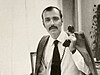
“I think he [Andy Warhol] would be very interested in the moment that the Dalai Lama appears, being involved in such a kind of idea. Andy has always difficulties with this kind of political activities, because he works in another kind of world, but he is always.. .Also when he was here (in Germany) last week, he is very interested to hear a lot of new information. He has a kind of observing sense in the back of his mind. So, he is always interested to follow the development, and there is really a kind of imaginative process going on, I think.”

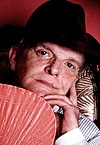
Truman Capote on Andy Warhol
“I'll give you an interesting analogy here. Have you ever read Carson McCullers' The Heart Is a Lonely Hunter? All right. Now in that book you'll remember that this deaf mute, Mr. Singer, this person who doesn't communicate at all, is finally revealed in a subtle way to be a completely empty, heartless person. And yet because he's a deaf mute, he symbolizes things to desperate people. They come to him and tell him all their troubles. They cling to him as a source of strength, as a kind of semi-religious figure in their lives. Andy is kind of like Mr. Singer. Desperate, lost people find their way to him, looking for some sort of salvation, and Andy sort of sits back like a deaf mute with very little to offer.”

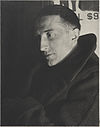
Marcel Duchamp on Andy Warhol
“This Neo-Dada, which they call New Realism, Pop Art, Assemblage etc. [Duchamp is referring to Andy Warhol and Roy Lichtenstein,] is an easy way out and lives on what Dada did. When I discovered ready-mades I thought to discourage aesthetics. In Neo-Dada they have taken my ready-made's and found aesthetic beauty in them. I threw the bottle-rack and the urinal in their faces as a challenge and now they admire them for their aesthetic beauty.”

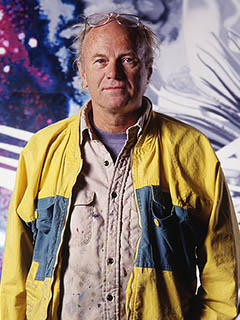

About Andy Warhol
Andy Warhol (born Andrew Warhola; 6 August 1928 – 22 February 1987) was an American painter, filmmaker, publisher, actor and major figure in the Pop Art movement.