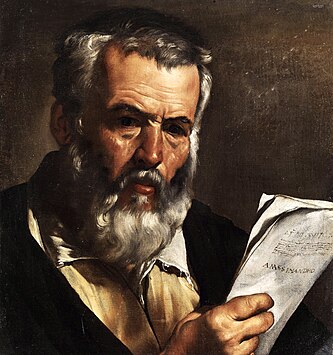
Anaximandros... pupil and companion of Thales, was like him an astronomer, geographer, and physicist, seeking for a first principle (for which he invented the name); affirming an infinite material cause, without beginning and indestructible, with an infinite number of worlds;—and still showing the Chaldean impulse—speculating curiously on the descent of man from something aquatic, as well as on the form and motion of the earth (figured by him as a cylinder), the nature and motions of the solar system, and thunder and lightning. It seems doubtful whether, as affirmed by Eudemus, he taught the doctrine of the earth's motion; but that this doctrine was derived from the Babylonian schools of astronomy is so probable that it may have been accepted in Miletos in his day.
What It Means
This is a placeholder explanation generated by the low-overhead model. It interprets "Anaximandros... pupil and companion of Thales, was like him an astronomer, geographer, and physicist, seeking for a first principle (for which he invented the name); affirming an infinite material cause, without beginning and indestructible, with an infinite number of worlds;—and still showing the Chaldean impulse—speculating curiously on the descent of man from something aquatic, as well as on the form and motion of the earth (figured by him as a cylinder), the nature and motions of the solar system, and thunder and lightning. It seems doubtful whether, as affirmed by Eudemus, he taught the doctrine of the earth's motion; but that this doctrine was derived from the Babylonian schools of astronomy is so probable that it may have been accepted in Miletos in his day." in the context of "John Mackinnon Robertson, A Short History of Freethought Ancient and Modern, Vol.1" to mean that wisdom is timeless.
Tags
About Anaximander