Link Copied!
Anatol Lieven Quotes (1960-)
Author, King



About Anatol Lieven
Anatol Lieven (born 28 June 1960) is a British author, journalist, and policy analyst. He is currently a visiting professor at King's College London and senior fellow at the Quincy Institute for Responsible Statecraft.
Best Anatol Lieven Quotes
Shortest
Earliest
Explore our curated collection of the most famous and impactful Anatol Lieven quotes.
“Incidentally, the argument here that this is necessary because it’s up to the Ukrainians — at this point, what is the first country that would be completely destroyed? Has anyone thought of asking ordinary Ukrainians if that is a price they think worth paying?”
Unsourced — Primary work/page citation not yet verified in the QuotesCosmos archive. Per our Unnamed Sources & Verification Policy, quotes without confirmed primary editions are explicitly marked Unsourced while under editorial review.
“It would mean the end of civilization. As innumerable studies have shown, it would be exceptionally difficult in those circumstances to avoid escalation to total nuclear war... Humanity as such would survive in extremely poor shape. America, Russia, Europe would not.”

Unsourced — Primary work/page citation not yet verified in the QuotesCosmos archive. Per our Unnamed Sources & Verification Policy, quotes without confirmed primary editions are explicitly marked Unsourced while under editorial review.
“Russian propaganda says that the Maidan Revolution was simply a coup and orchestrated by America. Well, no, because many ordinary Ukrainians, especially younger Ukrainians, including Russian-speaking Ukrainians, desperately wanted to get away from this horribly corrupt, economically stagnant post-Soviet reality and join the West”
Unsourced — Primary work/page citation not yet verified in the QuotesCosmos archive. Per our Unnamed Sources & Verification Policy, quotes without confirmed primary editions are explicitly marked Unsourced while under editorial review.
“It may also be pointed out that in the Middle East, it is the U.S. that has frequently acted as a disruptor as with the invasion of Iraq, the destruction of the Libyan state, and Trump’s decision to abandon the nuclear agreement with Iran, while Russia has often defended the status quo—partly due to a fear of Islamist terrorism that it shares with the U.S.”
Unsourced — Primary work/page citation not yet verified in the QuotesCosmos archive. Per our Unnamed Sources & Verification Policy, quotes without confirmed primary editions are explicitly marked Unsourced while under editorial review.
“My Russian interlocutors, some of whom I’ve known for many years, are by no means pro-Western anymore; they’re very angry with Western policy in recent years and they’re not pro-Ukrainian. But I have to say they’re horrified by what has happened. They really didn’t expect an invasion on this scale. They thought something would happen, but that it would be much more limited.”
Unsourced — Primary work/page citation not yet verified in the QuotesCosmos archive. Per our Unnamed Sources & Verification Policy, quotes without confirmed primary editions are explicitly marked Unsourced while under editorial review.
“A central distinction in realist international relations thought is that between vital and secondary national interests. Vital interests are threats to a state’s survival, and can take the form either of conquest and subjugation from outside... Rivalry between the United States and China is not a battle to the death of this kind, and it is very important that the United States not see it as such.”
Unsourced — Primary work/page citation not yet verified in the QuotesCosmos archive. Per our Unnamed Sources & Verification Policy, quotes without confirmed primary editions are explicitly marked Unsourced while under editorial review.
“It was remarkable how few people were asking: How does what America is doing or threatening to do or will do as an occupying force — how is that likely to resemble what America did in Vietnam? And how far do the illusions of universal primacy and of supposedly defending freedom and democracy against its enemies — how is that contributing, in fact, to the militarization of U.S. policy and the undermining of global peace?”
Unsourced — Primary work/page citation not yet verified in the QuotesCosmos archive. Per our Unnamed Sources & Verification Policy, quotes without confirmed primary editions are explicitly marked Unsourced while under editorial review.
“The phrase “a new cold war” is a cheap journalistic formula, but it contains real dangers. The United States’ geopolitical competition with China is fundamentally different from that with the Soviet Union, and if the U.S. establishment frames it in the terms of the Cold War, it may do great damage to the United States and the world in general. ... Beijing’s ambitions shouldn’t be treated as an existential threat to the United States.”

Unsourced — Primary work/page citation not yet verified in the QuotesCosmos archive. Per our Unnamed Sources & Verification Policy, quotes without confirmed primary editions are explicitly marked Unsourced while under editorial review.
“Russia will do their utmost not to target civilians in Ukraine or Ukrainian cities, because their whole political plan depends on keeping enough of the population on their side. But if enough of the Ukrainian troops retreat into the cities to fight it out, then the cities will be badly damaged and lots of civilians will be killed. That will obviously tarnish Russia still further in the eyes of Western and international opinion, but it will also make it even more difficult politically for Russia’s plans within Ukraine.”

Unsourced — Primary work/page citation not yet verified in the QuotesCosmos archive. Per our Unnamed Sources & Verification Policy, quotes without confirmed primary editions are explicitly marked Unsourced while under editorial review.
“Failing at least initial moves towards such a compromise, it does indeed look likely that there will be some form of new Russian attack on Ukraine, though by no means necessarily a large-scale invasion. In the event of war, however far the Russian army marches will be followed by a new Russian proposal for a deal in return for Russian withdrawal. The only difference between then and now will be that NATO will have been humiliated by its inability to fight, the West and Ukraine will be in a much weaker position to negotiate a favorable deal—and that in the meantime, thousands of people will have died.”

Unsourced — Primary work/page citation not yet verified in the QuotesCosmos archive. Per our Unnamed Sources & Verification Policy, quotes without confirmed primary editions are explicitly marked Unsourced while under editorial review.
“Russia and America are still talking on fairly cordial terms in public, as indeed are Russia and Western Europe, and the dialogue continues on energy and other subjects...
The most important element was probably a negative, which is that the U.S. has still not agreed, unlike the rest of the world, to accept Russia into the WTO... the fact of the matter is, given its record at present, the U.S. is in a very weak position when it comes to lecturing Russia on a whole range of subjects, and Putin, on the other hand, is in a pretty strong position, above all, because he does have the support of the overwhelming majority of Russians.”
The most important element was probably a negative, which is that the U.S. has still not agreed, unlike the rest of the world, to accept Russia into the WTO... the fact of the matter is, given its record at present, the U.S. is in a very weak position when it comes to lecturing Russia on a whole range of subjects, and Putin, on the other hand, is in a pretty strong position, above all, because he does have the support of the overwhelming majority of Russians.”
Unsourced — Primary work/page citation not yet verified in the QuotesCosmos archive. Per our Unnamed Sources & Verification Policy, quotes without confirmed primary editions are explicitly marked Unsourced while under editorial review.
“The existing crisis with Russia has origins that go far beyond Putin. Russia has a foreign and security blob, just as does the United States, with a set of semi-permanent beliefs about Russian vital interests rooted in national history and culture, which are shared by large parts of the population. These include the exclusion of hostile military alliances from Russia’s neighborhood and the protection of the political position and cultural rights of Russian minorities.
In the case of Ukraine, NATO membership for that country implied the expulsion of Russia from the naval base of Sevastopol in Crimea (a city of immense importance to Russia, both strategic and emotional), and the creation of a hard international frontier between Russia and the Russian and Russian-speaking minorities in Ukraine, making up more than a third of the Ukrainian population.”
In the case of Ukraine, NATO membership for that country implied the expulsion of Russia from the naval base of Sevastopol in Crimea (a city of immense importance to Russia, both strategic and emotional), and the creation of a hard international frontier between Russia and the Russian and Russian-speaking minorities in Ukraine, making up more than a third of the Ukrainian population.”
Unsourced — Primary work/page citation not yet verified in the QuotesCosmos archive. Per our Unnamed Sources & Verification Policy, quotes without confirmed primary editions are explicitly marked Unsourced while under editorial review.
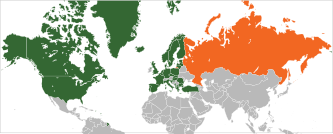
“Russia perceives NATO as an enemy — fair enough: NATO perceives Russia as an enemy — and is determined to prevent major countries on Russia’s borders from becoming members of NATO. Russia, in this way, I have to say, is no different from the United States. Your previous segment was about the history of U.S. coups in Honduras and other parts of Latin America to ensure that this area remains in American sphere of influence, or at the very least that external powers are excluded from that region. It’s called the Monroe Doctrine, right? Russia is no different in that regard. It doesn’t mean that Putin hopes for a new Soviet Union, but he does certainly want to keep NATO out of that region and is prepared to fight, as he’s shown in the past, to stop that happening. The problem about NATO is that it talks the talk, but, I mean, no serious person thinks that European countries, with the possible exception of Poland, will go to war for Ukraine. So, this, as well as the gas dependence, which you mentioned, is, in the end, a major card in Russia’s hand, that — in the very last resort. I’m not saying that the Putin government wants war, but it is prepared to go to war in the very last resort, and NATO almost certainly is not...
Zelensky is extremely unpopular now for the failure to improve the economic situation — worsened by COVID, of course — and continued very high levels of corruption. ”
Zelensky is extremely unpopular now for the failure to improve the economic situation — worsened by COVID, of course — and continued very high levels of corruption. ”
Unsourced — Primary work/page citation not yet verified in the QuotesCosmos archive. Per our Unnamed Sources & Verification Policy, quotes without confirmed primary editions are explicitly marked Unsourced while under editorial review.
Anatol Lieven Quotes by Topic
Find exactly what you are looking for by browsing this categorized list of Anatol Lieven quotes by topic.
Anatol Lieven on Prelude to the Russian invasion of Ukraine 3 quotes
“It may just be grandstanding for domestic purposes, but the effort poses grave implications for American and international security... No politician or member of the U.S. foreign and security establishment has ever even attempted to explain why Russian involvement in Ukraine — with its territorial issues, its huge Russian minority, and deep historic, cultural, and emotional ties to one another — somehow implies Moscow’s desire to attack Poland or Romania, which contain no Russian minorities or territorial disputes.”

Unsourced — Primary work/page citation not yet verified in the QuotesCosmos archive. Per our Unnamed Sources & Verification Policy, quotes without confirmed primary editions are explicitly marked Unsourced while under editorial review.
Anatol Lieven on Russia–NATO relations 2 quotes
“Failing at least initial moves towards such a compromise, it does indeed look likely that there will be some form of new Russian attack on Ukraine, though by no means necessarily a large-scale invasion. In the event of war, however far the Russian army marches will be followed by a new Russian proposal for a deal in return for Russian withdrawal. The only difference between then and now will be that NATO will have been humiliated by its inability to fight, the West and Ukraine will be in a much weaker position to negotiate a favorable deal—and that in the meantime, thousands of people will have died.”

Unsourced — Primary work/page citation not yet verified in the QuotesCosmos archive. Per our Unnamed Sources & Verification Policy, quotes without confirmed primary editions are explicitly marked Unsourced while under editorial review.
Anatol Lieven on Khojaly Massacre
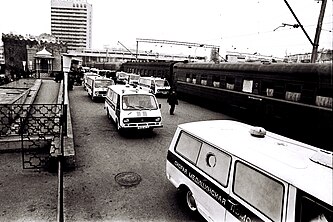
“Two groups, apparently families, had fallen together, the children cradled in the women’s arms. Several of them, including one small girl, had terrible head injuries: only her face was left. Survivors have told how they saw Armenians shooting them point blank as they lay on the ground.”
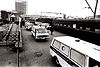
Unsourced — Primary work/page citation not yet verified in the QuotesCosmos archive. Per our Unnamed Sources & Verification Policy, quotes without confirmed primary editions are explicitly marked Unsourced while under editorial review.
Anatol Lieven on Russian invasion of Ukraine
“My Russian interlocutors, some of whom I’ve known for many years, are by no means pro-Western anymore; they’re very angry with Western policy in recent years and they’re not pro-Ukrainian. But I have to say they’re horrified by what has happened. They really didn’t expect an invasion on this scale. They thought something would happen, but that it would be much more limited.”

Unsourced — Primary work/page citation not yet verified in the QuotesCosmos archive. Per our Unnamed Sources & Verification Policy, quotes without confirmed primary editions are explicitly marked Unsourced while under editorial review.
About Anatol Lieven
Anatol Lieven (born 28 June 1960) is a British author, journalist, and policy analyst. He is currently a visiting professor at King's College London and senior fellow at the Quincy Institute for Responsible Statecraft.