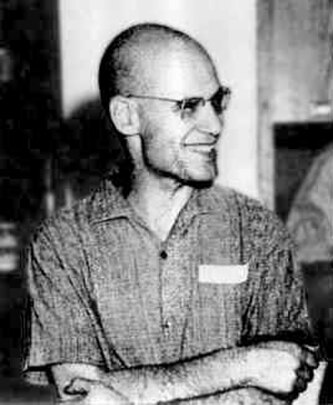
Many people who knew Grothendieck during his time at I.H.E.S. speak of his kindness, his openness to any kind of question, his gentle humor. He was often barefoot. He fasted once a week in opposition to the war in Vietnam. Mazur recalled that Grothendieck had met a family at the local train station with nowhere to stay, and he invited them to live in the basement apartment of his home. He had a machine installed that helped make taramasalata—a fish-roe spread—so that they could sell prepared food at the market.
What It Means
This is a placeholder explanation generated by the low-overhead model. It interprets "Many people who knew Grothendieck during his time at I.H.E.S. speak of his kindness, his openness to any kind of question, his gentle humor. He was often barefoot. He fasted once a week in opposition to the war in Vietnam. Mazur recalled that Grothendieck had met a family at the local train station with nowhere to stay, and he invited them to live in the basement apartment of his home. He had a machine installed that helped make taramasalata—a fish-roe spread—so that they could sell prepared food at the market." in the context of "Rivka Galchen, (May 16, 2022), "The Mysterious Disappearance of a Revolutionary Mathematician", The New Yorker" to mean that wisdom is timeless.
Tags
About Alexander Grothendieck