Ch. 5
“
The apparent discrepancy in the Gospel narrative aroused no doubt in my mind as to the literal truth of either of the texts. Indeed, my falling away from grace was not occasioned by any intellectual qualms; I accepted the theology of the Plymouth Brethren. In fact, I could hardly conceive of the existence of people who might doubt it. I simply went over to Satan's side; and to this hour I cannot tell why.
— Aleister Crowley
What It Means
This is a placeholder explanation generated by the low-overhead model. It interprets "The apparent discrepancy in the Gospel narrative aroused no doubt in my mind as to the literal truth of either of the texts. Indeed, my falling away from grace was not occasioned by any intellectual qualms; I accepted the theology of the Plymouth Brethren. In fact, I could hardly conceive of the existence of people who might doubt it. I simply went over to Satan's side; and to this hour I cannot tell why." in the context of "Ch. 5" to mean that wisdom is timeless.
Source: Wikiquote: "Aleister Crowley" (Quotes, The Confessions of Aleister Crowley (1929): The Spirit of Solitude: An Autohagiography: subsequently re-Antichristened The Confessions of Aleister Crowley : An Autohagiography (1929); only the first 2 Parts were published in 1929, the full 6 Parts in 1969.)
The 'What it means' explanation text was generated by Google Gemini Flash (accessed January 18, 2026). https://gemini.google.com/app
Tags
About Aleister Crowley
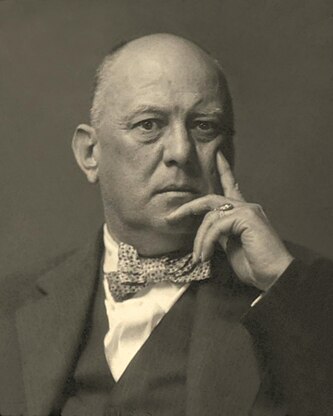
Aleister Crowley (12 October 1875 – 1 December 1947), born Edward Alexander Crowley, was a British occultist, mystic, poet, and social provocateur, famous for his development of the philosophical system called Thelema, and his concepts of magic, which he called Magick.
About Aleister Crowley
Aleister Crowley (12 October 1875 – 1 December 1947), born Edward Alexander Crowley, was a British occultist, mystic, poet, and social provocateur, famous for his development of the philosophical system called Thelema, and his concepts of magic, which he called Magick.
View all quotes →