Ch. 48
“
Destiny is an absolutely definite and inexorable ruler. Physical ability and moral determination count for nothing. It is impossible to perform the simplest act when the gods say "No." I have no idea how they bring pressure to bear on such occasions; I only know that it is irresistible. One may be wholeheartedly eager to do something which is as easy as falling off a log; and yet it is impossible.
— Aleister Crowley
What It Means
This is a placeholder explanation generated by the low-overhead model. It interprets "Destiny is an absolutely definite and inexorable ruler. Physical ability and moral determination count for nothing. It is impossible to perform the simplest act when the gods say "No." I have no idea how they bring pressure to bear on such occasions; I only know that it is irresistible. One may be wholeheartedly eager to do something which is as easy as falling off a log; and yet it is impossible." in the context of "Ch. 48" to mean that wisdom is timeless.
Source: Wikiquote: "Aleister Crowley" (Quotes, The Confessions of Aleister Crowley (1929): The Spirit of Solitude: An Autohagiography: subsequently re-Antichristened The Confessions of Aleister Crowley : An Autohagiography (1929); only the first 2 Parts were published in 1929, the full 6 Parts in 1969.)
The 'What it means' explanation text was generated by Google Gemini Flash (accessed January 18, 2026). https://gemini.google.com/app
Tags
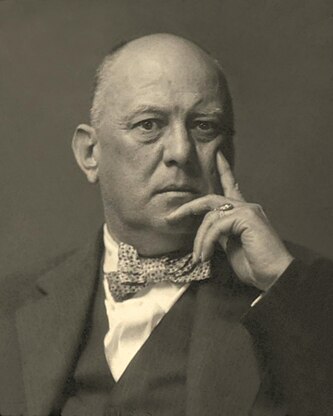
About Aleister Crowley
Aleister Crowley (12 October 1875 – 1 December 1947), born Edward Alexander Crowley, was a British occultist, mystic, poet, and social provocateur, famous for his development of the philosophical system called Thelema, and his concepts of magic, which he called Magick.
About Aleister Crowley
Aleister Crowley (12 October 1875 – 1 December 1947), born Edward Alexander Crowley, was a British occultist, mystic, poet, and social provocateur, famous for his development of the philosophical system called Thelema, and his concepts of magic, which he called Magick.
View all quotes →