Link Copied!
Aldo Leopold Quotes (1887-1948)




About Aldo Leopold
Aldo Leopold (January 11, 1887 – April 21, 1948) was a United States wildlife biologist and conservationist. He was a professor at the University of Wisconsin and is best known for his book A Sand County Almanac (1949), which has sold more than two million copies.
Best Aldo Leopold Quotes
Shortest
Earliest
Explore our curated collection of the most famous and impactful Aldo Leopold quotes.
“Only economists mistake physical opulence for riches.”

“Nonconformity is the highest evolutionary attainment of social animals.”

“Wildflower corners are easy to maintain, but once gone, they are hard to rebuild.”
“One of the penalties of an ecological education is that one lives alone in a world of wounds.”

“Patriotism requires less and less of making the eagle scream, but more and more of making him think.”

“Conservation is not merely a thing to be enshrined in outdoor museums, but a way of living on land.”

“We stand guard over works of art, but species representing the work of aeons are stolen from under our noses.”
“No farmer-sportsman group is stronger than the ties of mutual confidence and enthusiasm which bind its members.”

“That biological jack-of-all-trades called ecologist tries to be and do all these things. Needless to say, he does not succeed.”
“Relegating conservation to government is like relegating virtue to the Sabbath. Turns over to professionals what should be daily work of amateurs.”

“Many of the attributes most distinctive of America and Americans are the impress of the wilderness. … Shall we now exterminate this thing that made us Americans?”
“What conservation education must build is an ethical underpinning for land economics and a universal curiosity to understand the land mechanism. Conservation may then follow.”
“If we lose our wilderness, we have nothing left, in my opinion, worth fighting for; or to be more exact, a completely industrialized United States is of no consequence to me.”
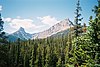
“What more delightful avocation than to take a piece of land and, by cautious experimentation, to prove how it works? What more substantial service to conservation than to practice it on one's own land?”

“[After describing a hopper for feeding winter game:] If you think you're too old to enjoy building such contraptions — that only Boy Scouts get a kick out of such nonsense — just try it. You may end up by building several.”

“Hunting for sport is an improvement over hunting for food, in that there has been added to the test of skill and ethical code, which the hunter formulates for himself, and must live up to without the moral support of bystanders.”

“Bread and beauty grow best together. Their harmonious integration can make farming not only a business but an art; the land not only a food-factory but an instrument for self-expression, on which each can play music to his own choosing.”
“A profession is a body of men who voluntarily measure their work by a higher standard than their clients demand. To be professionally acceptable, a policy must be sound as well as salable. Wildlife administration, in this respect, is not yet a profession.”
“How would you like to have a thousand brilliantly colored cliff swallows keeping house in the eaves of your barn, and gobbling up insects over your farm at the rate of 100,000 per day? There are many Wisconsin farmsteads where such a swallow-show is a distinct possibility.”
“Every region should retain representative samples of its original or wilderness condition, to serve science as a sample of normality. Just as doctors must study healthy people to understand disease, so must the land sciences study the wilderness to understand disorders of the land-mechanism.”
“We speak glibly of conservation education, but what do we mean by it? If we mean indoctrination, then let us be reminded that it is just as easy to indoctrinate with fallacies as with facts. If we mean to teach the capacity for independent judgement, then I am appalled by the magnitude of the task.”

“Ideas, like men, can become dictators. We Americans have so far escaped regimentation by our rulers, but have we escaped regimentation by our own ideas? I doubt if there exists today a more complete regimentation of the human mind than that accomplished by our self-imposed doctrine of ruthless utilitarianism.”

“Conservation is a state of harmony between men and land. … Harmony with land is like harmony with a friend; you cannot cherish his right hand and chop off his left. That is to say, you cannot love game and hate predators; you cannot conserve the waters and waste the ranges; you cannot build the forest and mine the farm. The land is one organism.”

“The direction is clear, and the first step is to throw your weight around on matters of right and wrong in land-use. Cease being intimidated by the argument that a right action is impossible because it does not yield maximum profits, or that a wrong action is to be condoned because it pays. That philosophy is dead in human relations, and its funeral in land-relations is overdue.”

“I personally believed, at least in 1914 when predator control began, that there could not be too much horned game, and that the extirpation of predators was a reasonable price to pay for better big game hunting. Some of us have learned since the tragic error of such a view, and acknowledged our mistake. One must judge from the present volume that the Fish and Wildlife Service does not see any mistake.”

“We shall never achieve harmony with land, any more than we shall achieve justice or liberty for people. In these higher aspirations the important thing is not to achieve, but to strive. … The problem, then, is how to bring about a striving for harmony with land among a people many of whom have forgotten there is any such thing as land, among whom education and culture have become almost synonymous with landlessness. This is the problem of 'conservation education'.”
“We are touring the Ozarks. Here is an abandoned field in which the ragweed is sparse and short. Does this tell us anything about why the mortgage was foreclosed? About how long ago? Would this field be a good place to look for quail? Does short ragweed have any connection with the human story behind yonder graveyard? If all the ragweed in this watershed were short, would that tell us anything about the future of floods in the steam? About the future prospects for bass or trout?”
“Any prairie farm can have a library of prairie plants, for they are drought-proof and fire-proof, and are content with any roadside, rocky knoll, or sandy hillside not needed for cow or plow. Unlike books, which divulge their meaning only when you dig for it, the prairie plants yearly repeat their story, in technicolor, from the first pale blooms of pasque in April to the wine-red plumes of bluestem in the fall. All but the blind may read, and gather from the reading new lessons in the meaning of America.”
“It can be stated as a sober fact that the iron-heel attitude has already reduced by half the ability of Wisconsin to support a cooperative community of men, animals, and plants during the next century. Moreover, it has saddled us with a repair bill, the magnitude of which we are just beginning to appreciate. If some foreign invader attempted such loot, the whole nation would resist to the last man and the last dollar. But as long as we loot ourselves, we charge the indignity to 'rugged individualism', and try to forget it.”

“There are those who are willing to be herded in droves through 'scenic' places; who find mountains grand if they be proper mountains, with waterfalls, cliffs, and lakes. To such the Kansas plains are tedious. They see the endless corn, but not the heave and grunt of ox teams breaking the prairie. History, for them, grows on campuses. They look at the low horizon, but they cannot see it, as de Vaca did, under the bellies of the buffalo.”
“What to do? I see only two courses open to the likes of us. One is to go live on locusts in the wilderness, if there is any wilderness left. The other is surreptitiously to set up within the economic Juggernaut certain new cogs and wheels whereby the residual love of nature, inherent even in Rotarians, may be made to recreate at least a fraction of those values which their love of "progress" is destroying. A briefer way to put it is: if we want Mr. Babbitt to rebuild outdoor America, we must let him use the same tools wherewith he destroyed it. He knows no other.”
“The outstanding scientific discovery of the twentieth century is not television, or radio, but rather the complexity of the land organism. Only those who know the most about it can appreciation how little we know about it. The last word in ignorance is the man who says of an animal or plant, "What good is it?" If the land mechanism as a whole is good, then every part is good, whether we understand it or not. If the biota, in the course of aeons, has built something we like but do not understand, then who but a fool would discard seemingly useless parts? To keep every cog and wheel is the first precaution of intelligent tinkering.”
“Modern natural history deals only incidentally with the identity of plants and animals, and only incidentally with their habits and behaviors. It deals principally with their relations to each other, their relation to the soil and water in which they grow, and their relations to the human beings who sing about 'my country' but see little or nothing of its inner workings. This new science of relationships is called ecology, but what we call it matters nothing. The question is, does the educated citizen know he is only a cog in an ecological mechanism? That if he will work with that mechanism his mental wealth and his material wealth can expand indefinitely? But that if he refuses to work with it, it will ultimately grind him to dust? If education does not teach us these things, then what is education for?”
Aldo Leopold Quotes by Topic
Find exactly what you are looking for by browsing this categorized list of Aldo Leopold quotes by topic.
Aldo Leopold on Wilderness 4 quotes
“Wilderness is the raw material out of which man has hammered the artifact called civilization.”
Aldo Leopold on Agriculture 2 quotes
“Bread and beauty grow best together. Their harmonious integration can make farming not only a business but an art; the land not only a food-factory but an instrument for self-expression, on which each can play music to his own choosing.”

Aldo Leopold on Fallacy
“It is just as easy to indoctrinate with fallacies as with facts.”

Aldo Leopold on Conformity
“Nonconformity is the highest evolutionary attainment of social animals.”
Quotes About Aldo Leopold
Gain deeper perspective through quotes about Aldo Leopold from others.
Curt Meine on Aldo Leopold
“The ... problem of elk protection ... forced Leopold to lay his conservation cards on the table. For virtually all other species of native big game, conservationists could rationalize their efforts as a sure good, since they had no detrimental effect on the human economy. Elk, however, did damage to crops.”
Misattributed Quotes
Quotes mistakenly credited to Aldo Leopold
About Aldo Leopold
Aldo Leopold (January 11, 1887 – April 21, 1948) was a United States wildlife biologist and conservationist. He was a professor at the University of Wisconsin and is best known for his book A Sand County Almanac (1949), which has sold more than two million copies.