• Very popular in French: "La culture est ce qui reste lorsque l'on a tout oublié" (Culture is that which remains, if one has forgotten everything). Attributed in French to Édouard Herriot (1872-1957) and, in English, sometimes to Ortega y Gasset. Another French variant is "la culture est ce qui reste lorsqu'on a oublié toutes les choses apprises" (Culture is that which remains if one has forgotten everything one has learned), which appears in the 1912 book Propos Critiques by Georges Duhamel, p. 14. And another English variant is "Culture is that which remains with a man when he has forgotten all he has learned" which appears in The Living Age: Volume 335 from 1929, p. 159, where it is attributed to "Edouard Herriot, French Minister of Education". Another English variant is "Education is that which remains behind when all we have learned at school is forgotten", which appears in The Education Outlook, vol. 60 p. 532 (from an issue dated 2 December 1907), where it is attributed to Ralph Waldo Emerson.
• The saying is found in an 1891 article by Swedish writer Ellen Key, "Själamorden i skolorna", which was published in the journal "Verdandi", no. 2, pages 86-98 (the saying is on p. 97). The same article was republished later as a chapter in her 1900 book "Barnets Århundrade". Here is the quote in Swedish (p. 160): Men bildning är lyckligtvis icke blott kunskap om fakta, utan enligt en ypperlig paradox: »det, som är kvar, sedan vi glömt allt, vad vi lärt». Here it is from the 1909 English translation of the book (p. 231): "But education happily is not simply the knowledge of facts, it is, as an admirable paradox has put it, what is left over after we have forgotten all we have learnt." From the way Ellen Key puts it, she doesn't take credit for the saying, but rather refers to it as an already known "paradox" that she explicitly puts between quotation marks.
Education is that which remains, if one has forgotten everything he learned in school.
What It Means
This is a placeholder explanation generated by the low-overhead model. It interprets "Education is that which remains, if one has forgotten everything he learned in school." in the context of "Einstein did write this quote in "On Education" from 1936, which appeared in Out of My Later Years, but it was not his own original quip, he attributed it to an unnamed "wit".
• Very popular in French: "La culture est ce qui reste lorsque l'on a tout oublié" (Culture is that which remains, if one has forgotten everything). Attributed in French to Édouard Herriot (1872-1957) and, in English, sometimes to Ortega y Gasset. Another French variant is "la culture est ce qui reste lorsqu'on a oublié toutes les choses apprises" (Culture is that which remains if one has forgotten everything one has learned), which appears in the 1912 book Propos Critiques by Georges Duhamel, p. 14. And another English variant is "Culture is that which remains with a man when he has forgotten all he has learned" which appears in The Living Age: Volume 335 from 1929, p. 159, where it is attributed to "Edouard Herriot, French Minister of Education". Another English variant is "Education is that which remains behind when all we have learned at school is forgotten", which appears in The Education Outlook, vol. 60 p. 532 (from an issue dated 2 December 1907), where it is attributed to Ralph Waldo Emerson.
• The saying is found in an 1891 article by Swedish writer Ellen Key, "Själamorden i skolorna", which was published in the journal "Verdandi", no. 2, pages 86-98 (the saying is on p. 97). The same article was republished later as a chapter in her 1900 book "Barnets Århundrade". Here is the quote in Swedish (p. 160): Men bildning är lyckligtvis icke blott kunskap om fakta, utan enligt en ypperlig paradox: »det, som är kvar, sedan vi glömt allt, vad vi lärt». Here it is from the 1909 English translation of the book (p. 231): "But education happily is not simply the knowledge of facts, it is, as an admirable paradox has put it, what is left over after we have forgotten all we have learnt." From the way Ellen Key puts it, she doesn't take credit for the saying, but rather refers to it as an already known "paradox" that she explicitly puts between quotation marks." to mean that wisdom is timeless.
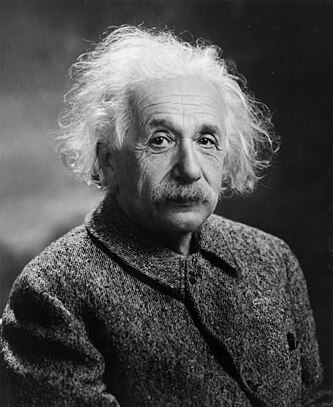
About Albert Einstein