Link Copied!
Alan Turing Quotes (1912-1954)
Philosopher, King, Mathematician
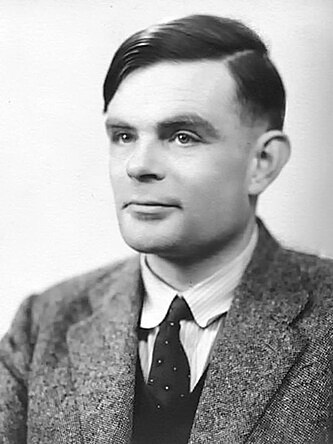

About Alan Turing
Alan Mathison Turing (23 June 1912 – 7 June 1954) was an English mathematician, computer scientist, logician, cryptanalyst, philosopher, and theoretical biologist. Turing was highly influential in the development of theoretical computer science, providing a formalisation of the concepts of algorithm and computation with the Turing machine, which can be considered a model of a general-purpose computer. Turing is widely considered to be the father of theoretical computer science and artificial intelligence.
Best Alan Turing Quotes
Shortest
Earliest
Explore our curated collection of the most famous and impactful Alan Turing quotes.
“[T]he m-configuration may be changed.”

“[T]hese operations include all those which are used in the computation...”


“Presumably the child-brain is something like a note-book as one buys it from the stationer's. Rather little mechanism, and lots of blank sheets.”
“The idea behind digital computers may be explained by saying that these machines are intended to carry out any operations which could be done by a human computer.”
“In some of the configurations in which the scanned square is blank... the machine writes down a new symbol on the scanned square: in other configurations it erases the scanned symbol.”
“A man provided with paper, pencil, and rubber, and subject to strict discipline, is in effect a universal machine.”
“We are not asking whether all digital computers would do well in the game nor whether the computers at present available would do well, but whether there are imaginable computers which would do well.”
“I believe that at the end of the century the use of words and general educated opinion will have altered so much that one will be able to speak of machines thinking without expecting to be contradicted.”
“We do not wish to penalise the machine for its inability to shine in beauty competitions, nor to penalise a man for losing in a race against an aeroplane. The conditions of our game make these disabilities irrelevant.”
“The "scanned symbol" is the only one of which the machine is... "directly aware". However, by altering its m-configuration the machine can effectively remember some of the symbols which it has "seen" (scanned) previously.”

“We may compare a man in the process of computing a real number to a machine which is only capable of a finite number of conditions q1, q2, ..., qK which will be called " m-configurations ".”

“To each computable sequence there corresponds at least one description number, while to no description number does there correspond more than one computable sequence. The computable sequences and numbers are therefore enumerable.”

“The Exclusion Principle is laid down purely for the benefit of the electrons themselves, who might be corrupted (and become dragons or demons) if allowed to associate too freely.”
“If one wants to make a machine mimic the behaviour of the human computer in some complex operation one has to ask him how it is done, and then translate the answer into the form of an instruction table. Constructing instruction tables is usually described as "programming."”

“Instruction tables will have to be made up by mathematicians with computing experience and perhaps a certain puzzle-solving ability. There need be no real danger of it ever becoming a drudge, for any processes that are quite mechanical may be turned over to the machine itself.”

“For some purposes we might use machines (choice... or c-machines) whose motion is only partially determined by the configuration... When such a machine reaches... ambiguous configurations, it cannot go on until some arbitrary choice has been made by an external operator. This would be the case if we were using machines to deal with axiomatic systems.”

“Suppose Mother wants Tommy to call at the cobbler's every morning on his way to school to see if her shoes are done, she can ask him afresh every morning. Alternatively she can stick up a notice once and for all in the hall which he will see when he leaves for school and which tells him to call for the shoes, and also to destroy the notice when he comes back if he has the shoes with him.”

“This is only a foretaste of what is to come, and only the shadow of what is going to be. We have to have some experience with the machine before we really know its capabilities. It may take years before we settle down to the new possibilities, but I do not see why it should not enter any one of the fields normally covered by the human intellect, and eventually compete on equal terms.”
“I am not very impressed with theological arguments whatever they may be used to support. Such arguments have often been found unsatisfactory in the past. In the time of Galileo it was argued that the texts, "And the sun stood still... and hasted not to go down about a whole day" (Joshua x. 13) and "He laid the foundations of the earth, that it should not move at any time" (Psalm cv. 5) were an adequate refutation of the Copernican theory.”
“'''Mathematical reasoning may be regarded rather schematically as the exercise of a combination of two facilities, which we may call intuition and ''ingenuity.''''' The activity of the intuition consists in making spontaneous judgements which are not the result of conscious trains of reasoning... The exercise of ingenuity in mathematics consists in aiding the intuition through suitable arrangements of propositions, and perhaps geometrical figures or drawings.”
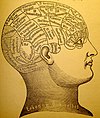
“There is a remarkably close parallel between the problems of the physicist and those of the cryptographer. The system on which a message is enciphered corresponds to the laws of the universe, the intercepted messages to the evidence available, the keys for a day or a message to important constants which have to be determined. The correspondence is very close, but the subject matter of cryptography is very easily dealt with by discrete machinery, physics not so easily.”

“The view that machines cannot give rise to surprises is due, I believe, to a fallacy to which philosophers and mathematicians are particularly subject. This is the assumption that as soon as a fact is presented to a mind all consequences of that fact spring into the mind simultaneously with it. It is a very useful assumption under many circumstances, but one too easily forgets that it is false. A natural consequence of doing so is that one then assumes that there is no virtue in the mere working out of consequences from data and general principles.”

“It will be useful to put... tables into a... standard form. ...The lines of the table are... of form
m-config. | Symbol | Operations | Final m-config.
In this way we obtain a complete description of the machine. ...This new description of the machine may be called the standard description (S.D). ...[W]e shall have a description of the machine in the form of an arabic numeral. The integer represented by this numeral may be called a description number (D.N) of the machine. The D.N determine the S.D and the structure of the machine uniquely. The machine whose D.N is n may be described as (n).”
m-config. | Symbol | Operations | Final m-config.
In this way we obtain a complete description of the machine. ...This new description of the machine may be called the standard description (S.D). ...[W]e shall have a description of the machine in the form of an arabic numeral. The integer represented by this numeral may be called a description number (D.N) of the machine. The D.N determine the S.D and the structure of the machine uniquely. The machine whose D.N is n may be described as (n).”
“A digital computer can usually be regarded as consisting of three parts: (i) Store. (ii) Executive unit. (iii) Control. ...The executive unit is the part which carries out the various individual operations involved in a calculation. ...It is the duty of the control to see that...[the table of] instructions are obeyed correctly and in the right order. ...A typical instruction might say—"Add the number stored in position 6809 to that in 4302 and put the result back into the latter storage position." Needless to say it would not occur in the machine expressed in English. It would more likely be coded in a form such as 6809430217. Here 17 says which of various possible operations [add] is to be performed on the two numbers. ...It will be noticed that the instruction takes up 10 digits and so forms one packet of information...”
“"Can machines think?"... The new form of the problem can be described in terms of a game which we call the 'imitation game." It is played with three people, a man (A), a woman (B), and an interrogator (C) who may be of either sex. The interrogator stays in a room apart from the other two. The object of the game for the interrogator is to determine which of the other two is the man and which is the woman. He knows them by labels X and Y, and at the end of the game he says either "X is A and Y is B" or "X is B and Y is A." The interrogator is allowed to put questions to A and B... We now ask the question, "What will happen when a machine takes the part of A in this game?" Will the interrogator decide wrongly as often when the game is played like this as he does when the game is played between a man and a woman? These questions replace our original, "Can machines think?"”

“Let us now assume, for the sake of argument, that these machines are a genuine possibility, and look at the consequences of constructing them. To do so would of course meet with great opposition, unless we have advanced greatly in religious toleration from the days of Galileo. There would be great opposition from the intellectuals who were afraid of being put out of a job. It is probable though that the intellectuals would be mistaken about this. There would be plenty to do, trying to understand what the machines were trying to say, i.e. in trying to keep one’s intelligence up to the standard set by the machines, for it seems probable that once the machine thinking method had started, it would not take long to outstrip our feeble powers. There would be no question of the machines dying, and they would be able to converse with each other to sharpen their wits. At some stage therefore we should have to expect the machines to take control, in the way that is mentioned in Samuel Butler’s “Erewhon”.”
“Another simile would be an atomic pile of less than critical size: an injected idea is to correspond to a neutron entering the pile from without. Each such neutron will cause a certain disturbance which eventually dies away. If, however, the size of the pile is sufficiently increased, the disturbance caused by such an incoming neutron will very likely go on and on increasing until the whole pile is destroyed. Is there a corresponding phenomenon for minds, and is there one for machines? There does seem to be one for the human mind. The majority of them seem to be "sub-critical," i.e., to correspond in this analogy to piles of sub-critical size. An idea presented to such a mind will on average give rise to less than one idea in reply. A smallish proportion are super-critical. An idea presented to such a mind may give rise to a whole "theory" consisting of secondary, tertiary and more remote ideas. Animals minds seem to be very definitely sub-critical. Adhering to this analogy we ask, "Can a machine be made to be super-critical?"”
“The "computable" numbers may be described briefly as the real numbers whose expressions as a decimal are calculable by finite means. ...According to my definition, a number is computable if its decimal can be written down by a machine. ...I show that certain large classes of numbers are computable. They include, for instance, the real parts of all algebraic numbers, the real parts of the zeros of the Bessel functions, the numbers π, e, etc. The computable numbers do not, however, include all definable numbers. ...[C]onclusions are reached which are superficially similar to those of Gödel. ...[I]t is shown ...that the Hilbertian Entscheidungsproblem can have no solution. In a recent paper Alonzo Church... reaches similar conclusions...”
Alan Turing Quotes by Topic
Find exactly what you are looking for by browsing this categorized list of Alan Turing quotes by topic.
Alan Turing on Differential equation
“Science is a differential equation. Religion is a boundary condition.”

Alan Turing on Theologians
“I am not very impressed with theological arguments whatever they may be used to support.”

Alan Turing on Computers
“A computer would deserve to be called intelligent if it could deceive a human into believing that it was human.”
Alan Turing on Dishonesty
“A computer would deserve to be called intelligent if it could deceive a human into believing that it was human.”

Alan Turing on Artificial intelligence
“A computer would deserve to be called intelligent if it could deceive a human into believing that it was human.”
Quotes About Alan Turing
Gain deeper perspective through quotes about Alan Turing from others.
Michael J. Beeson on Alan Turing
“Alan Turing was the first to make a careful analysis of the potential capabilities of machines, inventing his famous "Turing machines" for the purpose. He argued that if any machine could perform a computation, then some Turing machine could perform it. The argument focuses on the assertion that any machine's operations could be simulated, one step at a time, by certain simple operations, and that Turing machines were capable of those simple operations. Turing's first fame resulted from applying this analysis to a problem posed earlier by Hilbert, which concerned the possibility of mechanizing mathematics. Turing showed that in a certain sense, it is impossible to mechanize mathematics: We shall never be able to build an "oracle" machine that can correctly answer all mathematical questions presented to it with a "yes" or "no" answer. In another famous paper Turing went on to consider the somewhat different question, "Can machines think?." It is a different question, because perhaps machines can think, but they might not be any better at mathematics than humans are; or perhaps they might be better at mathematics than humans are, but not by thinking, just by brute-force calculation power. These two papers of Turing lie near the roots of the subjects today known as automated deduction and artificial intelligence.”
Benedict Cumberbatch on Alan Turing
“'''I’d keep hearing: 'Oh, Alan Turing? Wasn’t he something to do with Bletchley Park? Didn’t he create the Apple logo? Didn’t he bite an apple?'''' But not many people know the whole story, that he invented the computer, broke the Enigma code, was prosecuted for being a homosexual and underwent a year of oestrogen injections before dying in 1954. The irony and sickness of it was extraordinary! He wasn’t shouting from the rooftops or trying to start a cause, he was just a man who was gay. He’s such a quiet hero.”

Jerry Fodor on Alan Turing
“Beyond any doubt, the most important thing that has happened in cognitive science was Turing’s invention of the notion of mechanical rationality.”

Eric Hobsbawm on Alan Turing 2 quotes
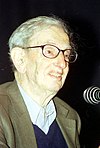
“And if the physicists who understood its potential had not told their generals and politicians, these would certainly have remained in ignorance, unless they were themselves postgraduate physicists, which was very unlikely. Again, Alan Turing's celebrated paper of 1935, which was to provide the foundation of modern computer theory, was originally written as a speculative exploration for mathematical logicians. The war gave him and others the occasion to translate theory into the beginnings of practice for the purpose of code-breaking, but when it appeared nobody except a handful of mathematicians even read, let alone took notice of Turing's paper. Even in his own college this clumsy-looking pale-faced genius, then a junior fellow with a taste for jogging, who posthumously became a sort of icon among homosexuals, was not a figure of any prominence; at least I do not remember him as such.”
Graham Moore on Alan Turing 3 quotes
“From a very young age, I knew about the legend of Alan Turing – among awkward, nerdy teenagers, he is a patron saint. He never fit in, but accomplished these wonderful things, as part of a secret queer history of computer science. And so I always dreamt of writing something about him, and I thought that there had never been a proper narrative treatment of his life, that he deserved. I by chance met the producers of the film at a party, and one of them told me they had optioned a biography. When I asked who it was, they said, ‘it’s a mathematician that you’ve never heard of.’ When they told me it was Alan Turing, I almost tackled them, and I told them I’d do anything to write this film, I’d write it for free. It was all about luck and passion.”

About Alan Turing
Alan Mathison Turing (23 June 1912 – 7 June 1954) was an English mathematician, computer scientist, logician, cryptanalyst, philosopher, and theoretical biologist. Turing was highly influential in the development of theoretical computer science, providing a formalisation of the concepts of algorithm and computation with the Turing machine, which can be considered a model of a general-purpose computer. Turing is widely considered to be the father of theoretical computer science and artificial intelligence.