line 312
“
For a deadly blow let him pay with a deadly blow; it is for him who has done a deed to suffer.
— Aeschylus
What It Means
This is a placeholder explanation generated by the low-overhead model. It interprets "For a deadly blow let him pay with a deadly blow; it is for him who has done a deed to suffer." in the context of "line 312" to mean that wisdom is timeless.
Source: Wikiquote: "Aeschylus" (Quotes, Oresteia (458 BC), The Libation Bearers)
The 'What it means' explanation text was generated by Google Gemini Flash (accessed January 18, 2026). https://gemini.google.com/app
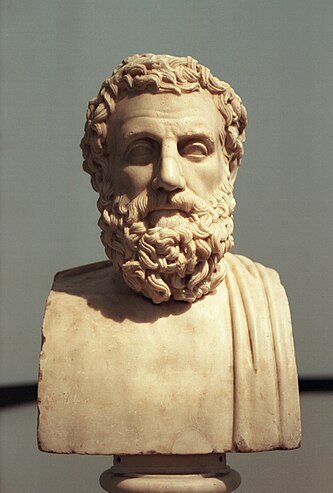
About Aeschylus
Aeschylus (Greek: Αἰσχύλος; 525 BC – 456 BC) was a playwright of ancient Greece, the earliest of the three greatest Greek tragedians, the others being Sophocles and Euripides.
About Aeschylus
Aeschylus (Greek: Αἰσχύλος; 525 BC – 456 BC) was a playwright of ancient Greece, the earliest of the three greatest Greek tragedians, the others being Sophocles and Euripides.
View all quotes →