“Brahma satyam jagat mithyam, jivo brahmaiva naparah”
— Adi Shankara

Explore our curated collection of the most famous and impactful Adi Shankara quotes.
“Atman is an ever-present Reality. Yet, because of ignorance it is not realised. On the destruction of ignorance Atman is realised.”
“Like bubbles in the water, the worlds rise, exist and dissolve in the Supreme Self, which is the material cause and the prop of everything.”
“Deities like Brahma and others taste only a particle, of the unlimited Bliss of Brahman and enjoy in proportion their share of that particle.”

“All objects are pervaded by Brahman. All actions are possible because of Brahman: therefore Brahman permeates everything as butter permeates milk.”

“When the force of desire for the Truth blossoms, selfish desires wither away, just like darkness vanishes before the radiance of the light of dawn.”
“Action cannot destroy ignorance, for it is not in conflict with or opposed to ignorance. Knowledge does verily destroy ignorance as light destroys deep darkness.”
“The Atman, the Sun of Knowledge that rises in the sky of the heart, destroys the darkness of the ignorance, pervades and sustains all and shines and makes everything to shine.”

“The Soul appears to be finite because of ignorance. When ignorance is destroyed the Self which does not admit of any multiplicity truly reveals itself by itself: like the Sun when the clouds pass away.”
“Just as the fire is the direct cause for cooking, so without Knowledge no emancipation can be had. Compared with all other forms of discipline Knowledge of the Self is the one direct means for liberation.”
“One should become aware of oneself, indivisible, and perfect; free from identification with all things transient, such as one’s body, functions, mind, and the sense of being the doer, for all these are the product of ignorance.”
“All the manifested world of things and beings are projected by imagination upon the substratum which is the Eternal All-pervading Vishnu, whose nature is Existence-Intelligence; just as the different ornaments are all made out of the same gold.”

“He who renouncing all activities, who is free of all the limitations of time, space and direction, worships his own Atman which is present everywhere, which is the destroyer of heat and cold, which is Bliss-Eternal and stainless, becomes All-knowing and All-pervading and attains thereafter Immortality.”
“Though he lives in the conditionings (Upadhis), he, the contemplative one, remains ever unconcerned with anything or he may move about like the wind, perfectly unattached.
On the destruction of the Upadhis, the contemplative one is totally absorbed in "Vishnu", the All-pervading Spirit, like water into water, space into space and light into light.
Realise That to be Brahman, the attainment of which leaves nothing more to be attained, the blessedness of which leaves no other blessing to be desired and the knowledge of which leaves nothing more to be known.”
Find exactly what you are looking for by browsing this categorized list of Adi Shankara quotes by topic.
“Sitting in a solitary place, freeing the mind from desires and controlling the senses, meditate with unswerving attention on the Atman which is One without-a-second.”
“Just as luminosity is the nature of the Sun, coolness of water and heat of fire, so too the nature of the Atman is Eternity, Purity, Reality, Consciousness and Bliss.”
“The Atman, the Sun of Knowledge that rises in the sky of the heart, destroys the darkness of the ignorance, pervades and sustains all and shines and makes everything to shine.”
“On the level of the body I am your servant.
On the level of the soul I am your lover.
On the level of the Self I am you.”
“I am other than name, form and action.
My nature is ever free!
I am Self, the supreme unconditioned Brahman.
I am pure Awareness, always non-dual.”
“One, who is eager to realize this highest truth spoken of in the Sruti, should rise above the fivefold form of desire: for a son, for wealth, for this world and the next, and are the outcome of a false reference to the Self of Varna (castes, colors, classes) and orders of life. These references are contradictory to right knowledge, and reasons are given by the Srutis regarding the prohibition of the acceptance of difference. For when the knowledge that the one non-dual Atman (Self) is beyond phenomenal existence is generated by the scriptures and reasoning, there cannot exist a knowledge side by side that is contradictory or contrary to it.”
“Like bubbles in the water, the worlds rise, exist and dissolve in the Supreme Self, which is the material cause and the prop of everything.”

“The Soul appears to be finite because of ignorance. When ignorance is destroyed the Self which does not admit of any multiplicity truly reveals itself by itself: like the Sun when the clouds pass away.”
“He who renouncing all activities, who is free of all the limitations of time, space and direction, worships his own Atman which is present everywhere, which is the destroyer of heat and cold, which is Bliss-Eternal and stainless, becomes All-knowing and All-pervading and attains thereafter Immortality.”
“He who renouncing all activities, who is free of all the limitations of time, space and direction, worships his own Atman which is present everywhere, which is the destroyer of heat and cold, which is Bliss-Eternal and stainless, becomes All-knowing and All-pervading and attains thereafter Immortality.”

“Like bubbles in the water, the worlds rise, exist and dissolve in the Supreme Self, which is the material cause and the prop of everything.”

Gain deeper perspective through quotes about Adi Shankara from others.
“I find that Shankara had grasped much of Vedantic truth, but that much was dark to him. I am bound to admit what he realised; I am not bound to exclude what he failed to realise.”
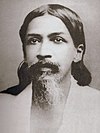
“Ancient or pre-Buddhistic Hinduism sought Him both in the world and outside it; it took its stand on the strength and beauty and joy of the Veda, unlike modern or post-Buddhistic Hinduism which is oppressed with Buddha's sense of universal sorrow and Shankara's sense of universal illusion,-Shankara who was the better able to destroy Buddhism because he was himself half a Buddhist.”
“In his short life of thirty-two years Shankara achieved that union of sage and saint, of wisdom and kindliness, which characterizes the loftiest type of man produced in India... There is much metaphysical wind in these discourses, and arid deserts of textual exposition; but they may be forgiven in a man who at the age of thirty could be at once the Aquinas and the Kant of India... Shankara establishes the source of his philosophy at a remote and subtle point never quite clearly visioned again until, a thousand years later, Immanuel Kant wrote his Critique of Pure Reason... We do not know how much Parmenides’ insistence that the Many are unreal, and that only the One exists, owed to the Upanishads, or contributed to Shankara; nor can we establish any connection, of cause or suggestion, between Shankara and the astonishingly similar philosophy of Immanuel Kant.”
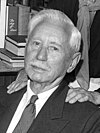
“Among Hindus, the date of Shankara is controversial; some date him to c. 500 BC. In this case, I wholeheartedly support the conventional date established by Indologists, among other reasons because his choice of Dwarka for his Western matha, and not Hinglaj (west of the Indus) as intended, fits neatly with the fact that the latter area had passed under Muslim control in the early eighth century.”
“There is no Metaphysics superior to that of Shankara.”
