One has only to read Manu after a bit of Kant to be struck by the former's extraordinary lack of universality. He seems to have no clear notion of a universal human nature from which one can deduce ethical decrees like 'Man shall not kill', or 'Man shall not tell an untruth'. One is aware of no notion of a 'state', no unitary law of all men … The main tradition of Judeo-Christian ethics is based on such a premise of universalisation. Manu will not understand such a premise. To be moral, for Manu, is to particularise – to ask who did what, to whom and when … Each class (jati) of man has his own laws, his own proper ethic, not to be universalised.
What It Means
This is a placeholder explanation generated by the low-overhead model. It interprets "One has only to read Manu after a bit of Kant to be struck by the former's extraordinary lack of universality. He seems to have no clear notion of a universal human nature from which one can deduce ethical decrees like 'Man shall not kill', or 'Man shall not tell an untruth'. One is aware of no notion of a 'state', no unitary law of all men … The main tradition of Judeo-Christian ethics is based on such a premise of universalisation. Manu will not understand such a premise. To be moral, for Manu, is to particularise – to ask who did what, to whom and when … Each class (jati) of man has his own laws, his own proper ethic, not to be universalised." in the context of "quoted from Malhotra, R., & Infinity Foundation (Princeton, N.J.). (2018). Being different: An Indian challenge to western universalism." to mean that wisdom is timeless.

Tags
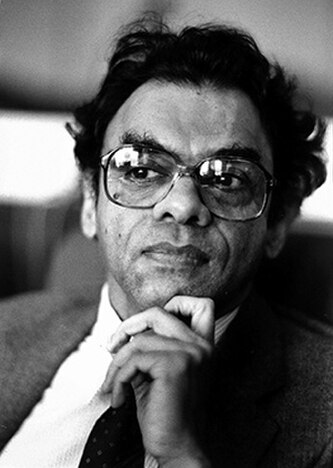
About A. K. Ramanujan